Casinos That Accept WebMoney in the UK: What Is Verified
 Available in GB
WebMoney acceptance is only confirmed when it appears as an available cashier option for the account and location.

Table of Contents
- What the available evidence actually says about WebMoney casinos
- When a different deposit route is the only verified option
- Deposit claims, phone billing and what the cashier process confirms
- Mobile slots do not establish which payment methods they accept
- Real-money play and the limits of the available slots information
- Depositing by phone is not the same as using a credit card
- Bonus terms for pay-by-phone deposits need separate checking
- Minimum deposits and phone-payment limits are not WebMoney limits
- A documented alternative is not a verified ‘best’ WebMoney slot site
- GamStop searches do not verify WebMoney acceptance or licensing
What the available evidence actually says about WebMoney casinos
A casino cannot be described as a WebMoney casino merely because it accepts another digital payment method, offers online slots or operates in the UK.
That distinction matters because payment logos and lists can outlive the cashier options they describe. A site may change its payment arrangements, and an old mention of WebMoney does not confirm that the method is still available to a UK customer. Nor does the fact that a casino accepts one payment service establish anything about another. I would not turn a Boku listing into a WebMoney recommendation. Different method. Different claim.
The practical test is specific: WebMoney needs to appear as an available option in the casino’s own cashier for the account and location in question. A general statement that a casino accepts e-wallets is not enough; neither is a page describing payment methods without identifying WebMoney. Even a named operator should not be presented as a confirmed WebMoney casino unless that acceptance is actually established.
Avantgarde Casino Payments UK: Deposit and Withdrawal Checks
The same applies to lists labelled “best”, “new” or “bonus” casinos. Those labels imply that the sites have been checked against the payment method and, in some cases, compared against one another.
The distinction also applies to devices and games. A casino being accessible on Android says something about access, not about its cashier. A site offering slots says something about its games, not about whether WebMoney can fund an account. Payment availability, device compatibility and game selection are separate questions. They should not be collapsed into one claim.
Boku provides a useful example of why payment methods need to be treated individually. It is a Pay by Phone option: deposits are charged to a mobile phone bill or deducted from prepaid credit, and it is deposit-only. Those are Boku characteristics, not clues to WebMoney’s status. Boku’s presence at a casino cannot confirm that WebMoney is accepted there, and Boku’s limits or conditions cannot be transferred to another payment service.
There is a further issue with the word “accepts”. A payment method might be mentioned in general information while not appearing for a particular account, or might have been removed from a cashier. A statement about past availability is not the same as confirmation of current availability. The distinction is especially important for a page describing the market in 2026: a date in a heading does not make an older payment claim current.
Casinos That Accept Monzo in the UK: Payment Guide
I have seen how easily a simple payment label turns into a broader promise. “WebMoney casino” can be read as confirmation that deposits work, while “best WebMoney casino” suggests the method has been checked across several operators. If neither point is established, the wording risks sending someone to a cashier that does not offer the option. That is not a minor detail; it is the central condition behind the claim.
For the same reason, a WebMoney bonus claim needs more than a general welcome-offer description. The existence of a casino promotion would not itself show that a WebMoney deposit qualifies. The payment method and the offer’s terms are separate matters, and Boku-related bonus information cannot settle either one for WebMoney.
A current cashier listing is the point at which that question can be answered for an individual casino. Until then, a confident list would be guesswork dressed as a recommendation.
Recommended online casinos
- BritsinoBonus: Welcome Package – Get your £2,200 + 2,000 FS · Payout speed: 1-3 business days
- NightLuckBonus: Welcome Pack + 805% Up To 6400€ + 280 FS · Payout speed: 1-3 business days
- x3betBonus: Welcome Pack 100% Up to £1.000 + 200 Free Spins · Payout speed: 1-3 business days
- SpinFormulaBonus: 550% Up To £15,000 + 550 FS · Payout speed: 1-3 business days
- JetsetspinsBonus: 200% Bonus + 100 Free Spins + Free Royal Wheel · Payout speed: 1-3 business days
- BeOnBetBonus: 100% up to €500 + 100 FS · Payout speed: 1-3 business days
When a different deposit route is the only verified option
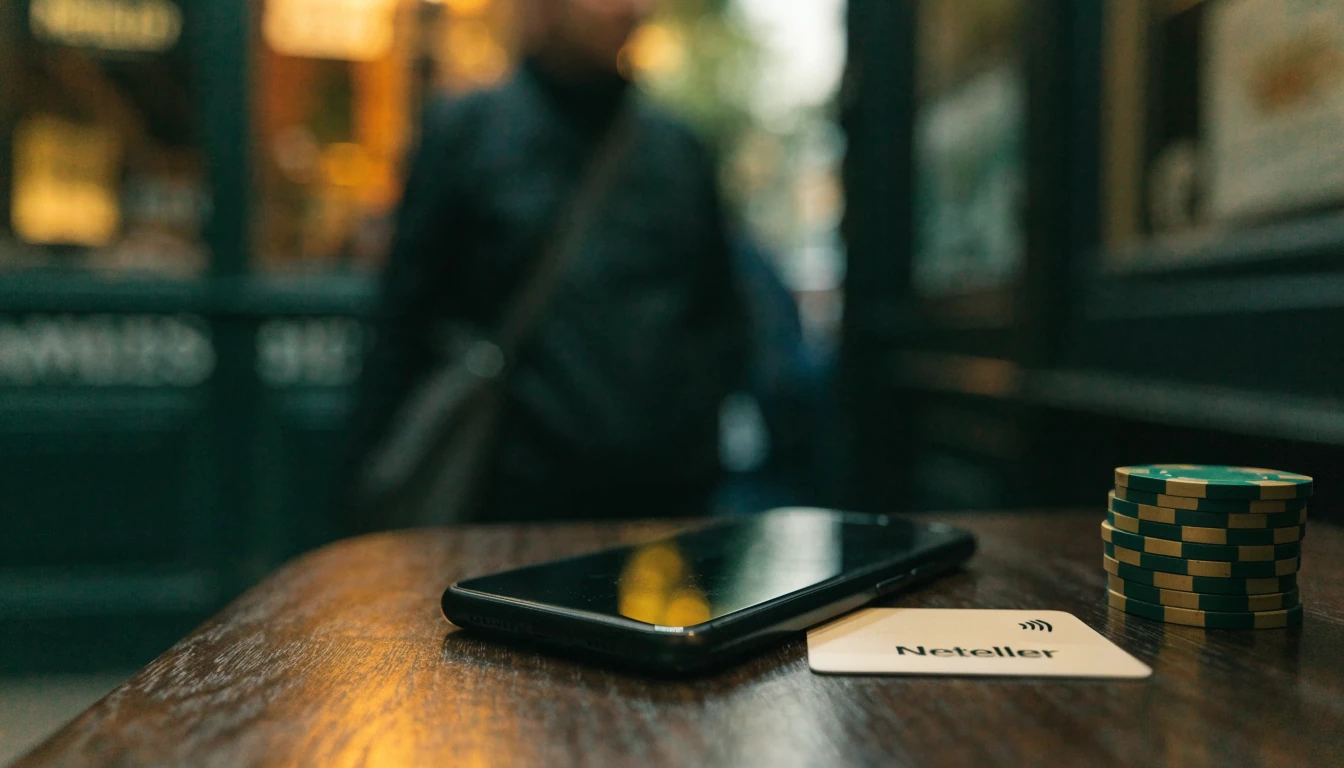
A documented alternative is a two-step route: fund a Neteller account with Boku, then use Neteller to deposit at a casino that accepts it. A specialist review describes that arrangement. It is not a WebMoney deposit, and it does not establish that a casino accepting Neteller also accepts WebMoney.
That distinction matters because payment methods are not interchangeable just because they can lead to the same casino account. A cashier lists the methods an operator makes available for a particular transaction. If Neteller appears there, that is evidence of Neteller acceptance; it says nothing about WebMoney. Likewise, using Boku to add money to Neteller does not turn the later casino deposit into a Boku or WebMoney payment. The route has separate stages, and each has its own provider and acceptance conditions.
Neteller Funding Route
Step 1: Fund Neteller
Use Boku to add funds to a Neteller account.
Step 2: Choose Casino
Identify a casino that accepts Neteller for deposits.
Step 3: Deposit
Use the funded Neteller account to make a deposit at the chosen casino.
I have seen payment comparisons flatten these steps into a loose claim that one method is an “alternative” to another. The word can mean only that the route may solve a practical funding problem. It does not mean that the payment methods share the same terms, that every casino supports them, or that the player can move funds between them in every circumstance. The narrow claim here is simply that Boku can be used to fund Neteller, and Neteller can then be used at casinos that accept Neteller.
For someone looking for WebMoney at a UK casino, that route may be relevant only if Neteller is acceptable instead. It does not answer whether WebMoney is available. Nor does it identify a particular casino as a WebMoney site, establish a current list, or provide a basis for ranking the “best” WebMoney casinos. A Neteller cashier option cannot fill those gaps.
The practical check is therefore about the exact method and the exact account. First, the Neteller account must be fundable through the stated Boku route. Then the intended casino must accept Neteller for deposits. Those are separate points to confirm, rather than assumptions that follow from a casino mentioning e-wallets generally. Payment labels matter. A site that supports one wallet has not thereby confirmed support for another.
There is also a difference between a route being described and it being suitable for every player. The available description establishes the sequence, not universal access or a guarantee that it will work in every case. It gives no basis for treating the route as an official substitute for WebMoney, or for assuming that the same casinos, restrictions or account conditions apply to both methods. The useful conclusion is modest: Neteller may provide a separate way to deposit where it is accepted, after being funded through Boku.
I would keep that wording precise when comparing payment options. “Boku to Neteller, then Neteller to the casino” describes a chain. “WebMoney accepted” describes a casino’s direct support for WebMoney. One statement cannot be used as proof of the other. Search results and payment round-ups often place alternatives side by side, but proximity on a page is not confirmation that their underlying services are connected.
Casinos That Accept Bitcoin in the UK
For a deposit decision, the cashier is the relevant point of confirmation for the method being used. If Neteller is listed, the evidence concerns Neteller. If WebMoney is not shown, the Boku-funded Neteller route does not establish that WebMoney can be selected instead. The same caution applies to descriptions of mobile or online casinos: the device used to play does not change which payment options the operator offers.
This alternative may be useful where the goal is to reach a casino that accepts Neteller, rather than to use WebMoney specifically. It should not be presented as a workaround that preserves WebMoney’s terms or as proof of WebMoney availability in the UK. It is a different payment path, with a limited and clearly defined claim behind it.
That is the boundary. A documented Neteller route exists; a WebMoney acceptance claim does not follow from it.
Deposit claims, phone billing and what the cashier process confirms
A payment-method label in a casino cashier is more useful than a promotional claim, but it confirms only what that cashier offers for the account being used. It does not establish that a different service, such as WebMoney, works there too. I treat the deposit flow as evidence of a specific route, not as proof that every similarly described payment option is available.
For Boku, the documented process is straightforward: select Boku in the cashier, enter a deposit amount and mobile number, then authorise the transaction using a verification code sent by SMS. That sequence shows how a Boku deposit is initiated. It does not show that a WebMoney account, card or wallet can be selected, nor that a casino accepts WebMoney simply because it accepts another payment method.
The distinction matters when a payment claim includes several separate promises. “WebMoney accepted” might be read as support for a WebMoney wallet, a linked card, or a particular deposit route. Those are not interchangeable descriptions. A cashier needs to name the actual method and present a usable flow for it. Without that, the label alone cannot settle whether the intended WebMoney service is supported.
Casinos That Accept Dogecoin in the UK: What to Check
The same caution applies to claims about no-minimum deposits. A minimum is a condition attached to a particular payment method and operator, not a general property of a casino. The Boku flow confirms that the player enters an amount, but that fact says nothing about the minimum WebMoney deposit at another cashier. Nor does an advertised low threshold establish that a WebMoney card will be treated like a WebMoney wallet.
I have seen payment claims become less precise as they pass from a cashier into summaries and promotional copy. A method may be named in a headline while the actual terms describe a different route, or the claim may refer to a service that is no longer offered. The useful check is the operator’s own current cashier and payment terms, where the method, account eligibility and transaction conditions should be visible before a deposit is made. A generic payment logo is not enough.
Bonus wording needs the same separation. A “no deposit” offer and a bonus tied to a deposit are different arrangements; neither label by itself says whether a particular payment method qualifies. One specialist review reported that the Boku deposits it assessed had no specific bonus attached and found no Boku deposit restrictions on those platforms. That is a report about the operators it examined, not a market-wide rule and not evidence about WebMoney. Bonus eligibility remains an operator-specific condition.
A no-wagering claim also needs to be read in the actual offer terms. The phrase may describe one part of an offer while other conditions still determine who can claim it, which games count, or how funds can be withdrawn. Nothing in the Boku SMS process answers those questions. It confirms a payment authorisation step, not a bonus entitlement.
The cashier is therefore a narrow but practical test. If Boku is selected, a phone number is entered and an SMS code is requested, that is evidence of a Boku deposit flow. It is not evidence of a WebMoney deposit, a WebMoney debit-card option, a no-deposit promotion or a particular minimum. Those claims need their own confirmation in the relevant operator’s current terms and cashier.
Do
- Check the operator’s current cashier for the specific method
- Read the actual offer terms for bonus eligibility
- Verify the operator’s UK Gambling Commission licence
Don’t
- Assume one payment method’s availability proves another
- Rely on generic payment logos in promotional copy
- Treat a deposit method as a guaranteed withdrawal route
The boundary is simple. Payment mechanics are not transferable.
Mobile slots do not establish which payment methods they accept
A slot being playable on a phone and a casino accepting WebMoney are separate questions. Mobile access describes how a game is displayed and controlled; payment acceptance is a decision made by the casino’s cashier. One does not establish the other.
I treat those as separate checks because the labels often sit close together in casino promotions. A site may advertise mobile slots, list a large game catalogue and show several deposit methods, but that does not mean every method can be used for every account or at every point in time. The cashier is where the available deposit options for that account are shown. A game’s presence on a mobile site does not confirm that WebMoney appears there.
The same distinction applies to searches for online slots that take WebMoney. A slot is a game, not the payment processor for the casino account. The operator handles deposits; the game is then launched through the casino’s website or app. A page about mobile compatibility can establish how the games run on a device, but it cannot by itself establish which payment methods the operator accepts.
That matters when a casino uses broad phrases such as “mobile casino” or “play anywhere”. Those describe access, not the cashier’s terms. From the operational side, the game catalogue and the payment menu are maintained as different parts of the service. A change to one does not necessarily change the other. Convenient wording. Separate systems.
EntroPay Casinos in the UK: How to Check Acceptance
A mobile browser also does not turn a payment method into a supported one. If WebMoney is not offered in the cashier, the fact that the casino’s slots load on a phone does not create a WebMoney route. Likewise, a WebMoney logo on a general payment page would not, by itself, prove that it is available for a particular account or transaction. The point is to distinguish a general claim from the option actually presented at deposit.
The word “free” can add another layer of confusion. A slot may be available to play without a cash deposit, but that says nothing about whether WebMoney is accepted for deposits at the casino. Game access and payment acceptance remain distinct, whether the play is described as free or connected with a casino account.
In Great Britain, online gambling is legal at sites holding a current UK Gambling Commission operating licence. That is a separate question from whether a particular site offers mobile slots or lists WebMoney. The licence establishes the operator’s regulatory status; it does not identify the payment methods in its cashier.
So a mobile slot catalogue should be read as information about games and access, not as proof of a WebMoney payment option. For a payment claim to mean anything, it needs to be tied to the casino’s actual deposit process. A playable game is not a payment confirmation.
Mobile access and game availability are separate from payment acceptance; a playable mobile slot does not confirm that WebMoney is a supported deposit method.
Real-money play and the limits of the available slots information
“Real money” describes what is at stake in a slot game; it does not identify how an account was funded. A game can be offered for cash play without the casino accepting every payment method a player might expect. I keep those two questions separate: whether a casino offers real-money slots, and whether its cashier accepts WebMoney.
That distinction matters because a game page and a payment option serve different purposes. A game page can explain how a slot works, while payment acceptance is a decision made at casino level. Seeing WebMoney mentioned alongside slots does not, by itself, establish that a particular casino will take it for a deposit. Nor does the presence of a real-money game tell anything about whether WebMoney can be used to fund the account.
The word “free” can muddy the picture. Free play and real-money play are different ways of using a slot; the label alone does not show that a deposit method is available, or that a free-play offer can be converted into cash. The same applies to phrases such as “no deposit”: they describe an offer condition, not proof that WebMoney is accepted for ordinary deposits. I would not read payment acceptance into the name of a game, an app, or a promotional description.
A useful review of a real-money slots site should therefore make the payment claim specific to the casino, rather than relying on a general statement that its games can be played for cash. The decisive detail is whether WebMoney appears as an available deposit method in that casino’s own cashier. A third-party description may be out of date or may be discussing a different payment route. The labels can travel further than the payment option.
Casinos That Accept Litecoin in the UK: What to Check
There is also a practical difference between finding a slot and being able to stake money on it. The game may be available in a casino’s lobby, but the account still needs a deposit route the casino accepts. Treating “WebMoney slots” as though it were a single product hides that split. One part is the game; the other is the casino’s payment setup.
I avoid naming a particular slot as a “WebMoney game” unless the link between that game and a casino’s accepted deposit methods is clear. Otherwise, the phrase can imply something the game itself cannot establish. Real-money access is not payment-method proof.
For a UK player, the relevant claim is not simply that a slot can be played for money, but that the casino offers the game and accepts the proposed funding method. Those are separate checks, not interchangeable assurances. A real-money label settles only the first.
Depositing by phone is not the same as using a credit card
Payment labels can make different routes sound interchangeable. They are not. Pay by Phone charges a deposit to a mobile account: with Boku, the amount is either added to a monthly phone bill or taken from available pay-as-you-go credit. A credit-card payment is a separate funding route, and UK-licensed casinos cannot accept credit cards for gambling. That restriction also covers credit-card funds routed through a money service business.
Credit Cards
UK-licensed casinos cannot accept credit cards for gambling, including funds routed through a money service business.
The distinction matters when a cashier displays several options together. A phone-billed deposit does not become a card deposit because the mobile account is paid by card, and a payment service’s name does not tell the whole story about how the funds reach the casino. The relevant question is the funding source and route, not just the button selected.
Boku also has a limit that changes how the account must be set up: it accepts deposits, not withdrawals. Casino winnings cannot be sent back through Boku. A player depositing this way must register another withdrawal method, such as a debit card, e-wallet or bank transfer. The deposit and the cash-out are separate transactions, with separate payment details.
That is why phrases such as “fast withdrawal” attached to a payment method need careful reading. A casino may process a withdrawal through another supported route, but that does not mean the original deposit method can receive it. I have seen the cashier choice treated as if it determined the whole payment relationship. It does not.
The same caution applies to WebMoney. A search for casinos linking WebMoney with credit cards, instant banking or direct withdrawals does not establish that those routes are available at a particular UK casino. Nor does it establish that WebMoney itself has closed in the UK or explain why it might have stopped being offered by an operator. A casino removing one cashier option and a payment service closing are different events.
Casinos That Accept MiFinity in the UK
For a UK casino, payment availability is only one part of the check. The operator must hold a current UK Gambling Commission operating licence to serve British customers. The licence does not make every payment method available, and seeing a familiar payment name does not confirm how deposits or withdrawals work. The cashier’s current terms are decisive. Short version: deposit is not withdrawal.
Bonus terms for pay-by-phone deposits need separate checking
A welcome offer and permission to use a particular deposit method are separate conditions. A casino may advertise a deposit match while excluding Pay by Phone transactions from the qualifying deposits. The offer headline does not settle that point; the bonus terms do.
A specialist review described a common welcome-offer structure as a 100% match up to £100, with a 35x wagering requirement. Those figures are an example reported by that review, not a fixed UK standard or a promise that a particular payment method will qualify. The wording that matters is usually in the offer’s eligibility rules: it determines which deposits count, and whether a bonus is credited at all.
The same specialist review reported that MrQ, Duelz, Mr Vegas and Videoslots accepted Pay by Phone deposits for bonus eligibility. That is a dated operator-specific claim, not a guarantee that the policy remains unchanged. Payment and promotion rules can be revised independently, so the cashier showing a method does not prove that a deposit made with it qualifies for an offer.
Expiry conditions need the same care. The review cited bonus funds expiring within 30 days and bonus spins within 72 hours. These are reported terms, not deadlines that apply across UK casinos. A promotion may define its own expiry, wagering rules and eligible games; the current terms attached to that offer are the operative ones.
Example Bonus Terms
One reported welcome-offer structure includes a 100% match up to £100 with a 35x wagering requirement, where bonus funds may expire within 30 days and spins within 72 hours.
For a WebMoney deposit, the distinction is sharper still. A casino’s general welcome bonus cannot establish that WebMoney is accepted, or that a WebMoney-funded deposit qualifies. Nor does a bonus label establish that a no-deposit promotion or a code applies to a particular payment route. Each is a separate claim requiring its own current terms.
I have seen the promotional headline do most of the selling, while payment exclusions sit further down the page. “Bonus eligible” is useful only when the named deposit method is covered by the actual offer conditions. Read the payment-method exclusion, wagering requirement, expiry and any game restrictions together before treating the advertised amount as available. The cashier and the promotion terms answer different questions.
Keep the distinction clean: a bonus may exist, a payment method may be offered, and eligibility may still depend on the operator’s current rules. No shortcut.
Minimum deposits and phone-payment limits are not WebMoney limits
A small deposit figure can look like a simple cashier setting. With Pay by Phone, it may instead reflect a limit imposed by the mobile network, while the casino controls which payment options and amounts its cashier offers. That distinction matters: Boku limits describe Boku, not WebMoney.
The published accounts of Boku limits do not agree. One specialist review describes a £30 per-transaction standard, with some casinos or networks permitting £40 or £50. Other accounts give a different picture: one puts a typical transaction at £10 and the daily ceiling at £30, while another gives a £30 daily limit without specifying a transaction cap. These are not interchangeable rules, and none establishes a WebMoney minimum.
Casinos That Accept E-Checks in the UK: What to Check
The same caution applies to smaller amounts. A specialist review says Boku deposits are restricted to amounts divisible by ten, giving £10, £20 and £30 as examples. That is a claim about a particular Pay by Phone method, not evidence that a casino accepts a £5 WebMoney deposit—or that any WebMoney cashier has a particular minimum. I would not treat a low figure shown in a general casino description as a payment-specific promise.
There is also a practical difference between the casino’s cashier limit and the network’s limit. A specialist review attributes daily Boku limits to the mobile operator rather than the casino. So a cashier may display an amount that the network will not authorise, depending on its rules and the account’s available balance. The displayed option is not the final approval.
For someone comparing payment methods, the useful check is therefore specific: identify the method actually named in the cashier, then read the amount and any limit shown for that method. Boku’s figures should not be copied across to WebMoney, even where both are being considered for a small or phone-related deposit. A WebMoney minimum cannot be inferred from a Boku limit.
This is where “low minimum” can mislead. It may describe one operator’s cashier setting, a network restriction, or a separate payment service. Without a WebMoney-specific condition, it says nothing dependable about the minimum for a WebMoney transaction. No shared limit.
Standard Boku Limit
Some reviews describe a £30 per-transaction standard.
Alternative Boku Limits
Certain casinos or networks may permit £40 or £50 transactions.
Daily Ceilings
Reports vary from a £30 daily limit to a £10 transaction with a £30 ceiling.
A documented alternative is not a verified ‘best’ WebMoney slot site
“Best” suggests a comparison on common terms: which casinos accept the payment method, what deposit conditions apply and how the options differ. That is not a sound basis for ranking WebMoney casinos in the UK. A site’s slot selection cannot establish that its cashier accepts WebMoney, and a payment option named in older material may not be available when a customer opens an account.
The same distinction applies to whether WebMoney remains active in the UK. The service’s status and a casino’s current payment options are separate questions. Even if an e-wallet can be used elsewhere, that does not show it is available at a particular UK casino. The cashier is the practical test of a payment route, not a game list or a general claim about the brand.
One alternative route has been described in a specialist review: fund a Neteller account through Boku, then use Neteller to deposit at a casino that accepts Neteller. That is an indirect route, not a WebMoney deposit and not evidence that Neteller is accepted at every casino. Each step depends on the relevant service and operator supporting it. The route also does not turn Boku into a withdrawal method; casino withdrawals need a separate method.
There is no defensible “best WebMoney slots site” ranking on that basis. It would combine two different decisions: choosing games and confirming how the account can be funded. A casino could offer slots without accepting a particular wallet, while a wallet’s availability would say nothing about the games on offer. Labels blur the distinction.
My rule at the counter was to treat a payment claim as specific to the operator and the cashier, not as a property of a game or a casino category. “Alternative” is not “equivalent”. Neteller funded through Boku is one described option for reaching a Neteller-accepting casino; it does not establish WebMoney acceptance, current availability, or a ranking of sites. These are separate checks.
Casinos That Accept Solana in the UK: What to Check
GamStop searches do not verify WebMoney acceptance or licensing
A casino described as outside GamStop is not thereby shown to accept WebMoney. Those are separate questions: one concerns a site’s relationship to a self-exclusion scheme; the other concerns the payment methods available in its cashier. I would not treat one claim as evidence for the other, or as proof that a site is authorised to serve customers in Great Britain.
The licensing test is distinct. The UK Gambling Commission oversees gambling in the UK, including online casino activity. For commercial gambling offered to people in Great Britain, it is the regulator responsible for the market. Its remit over remote gambling does not depend on where an operator keeps the equipment used to run its service. A business needs the relevant operating licence; individuals working in regulated roles may need personal licences.
That distinction matters when a site’s location or branding is used to imply that the normal rules do not apply. The location of the servers does not, by itself, remove the licensing requirement for remote gambling offered to Great Britain consumers. Nor does a payment logo establish a licence. Each claim needs to be assessed on its own terms.
I have seen how these labels can blur together in casino promotion: “not on GamStop” describes a status claim, while “accepts WebMoney” describes a cashier claim. Neither phrase confirms the other, and neither substitutes for checking the operator’s regulatory position. A WebMoney option, if displayed, would not itself demonstrate that the casino holds permission to serve the British market.
The practical distinction is plain. Payment acceptance and regulatory authorisation are separate checks. A casino’s GamStop wording cannot settle either one. Before any deposit, the operator’s licence should be checked against the UK Gambling Commission’s public register; a payment claim is not a licensing credential.
What are the deposit limits at pay-by-mobile casinos?
Boku deposits are generally capped at £30 per transaction, although some casinos or mobile networks may allow £40 or £50. Network-level limits are typically about £10 per transaction and £30 per day; PAYG deposits are also limited by the phone’s remaining credit.
What is the best alternative to Boku for casino deposits?
Fonix and Siru Mobile are pay-by-mobile alternatives used by some casinos. Another route is to fund Neteller with Boku and then deposit at a casino that accepts Neteller.
Can a casino deny issuing a promotion if I deposit with Boku?
Yes. Bonus eligibility for pay-by-phone deposits varies by casino, so check the promotion’s terms; some operators do allow these deposits to qualify.
Why might a Boku deposit be declined?
A deposit may exceed the limit set by the mobile network or the balance available on a PAYG phone. Boku deposits must also be in amounts divisible by ten.
How does Boku work?
Choose Boku in the casino cashier, enter an eligible deposit amount and your phone number, then confirm using the SMS verification code. The payment is charged to your monthly phone bill or deducted from your PAYG credit, and Boku cannot be used for withdrawals.
Created by the ”Avantgarde Casino” editorial team.