Live Dream Catcher Casino UK: What to Check
 Available in GB
A practical look at how the game, casino catalogue and access offered by an operator differ.
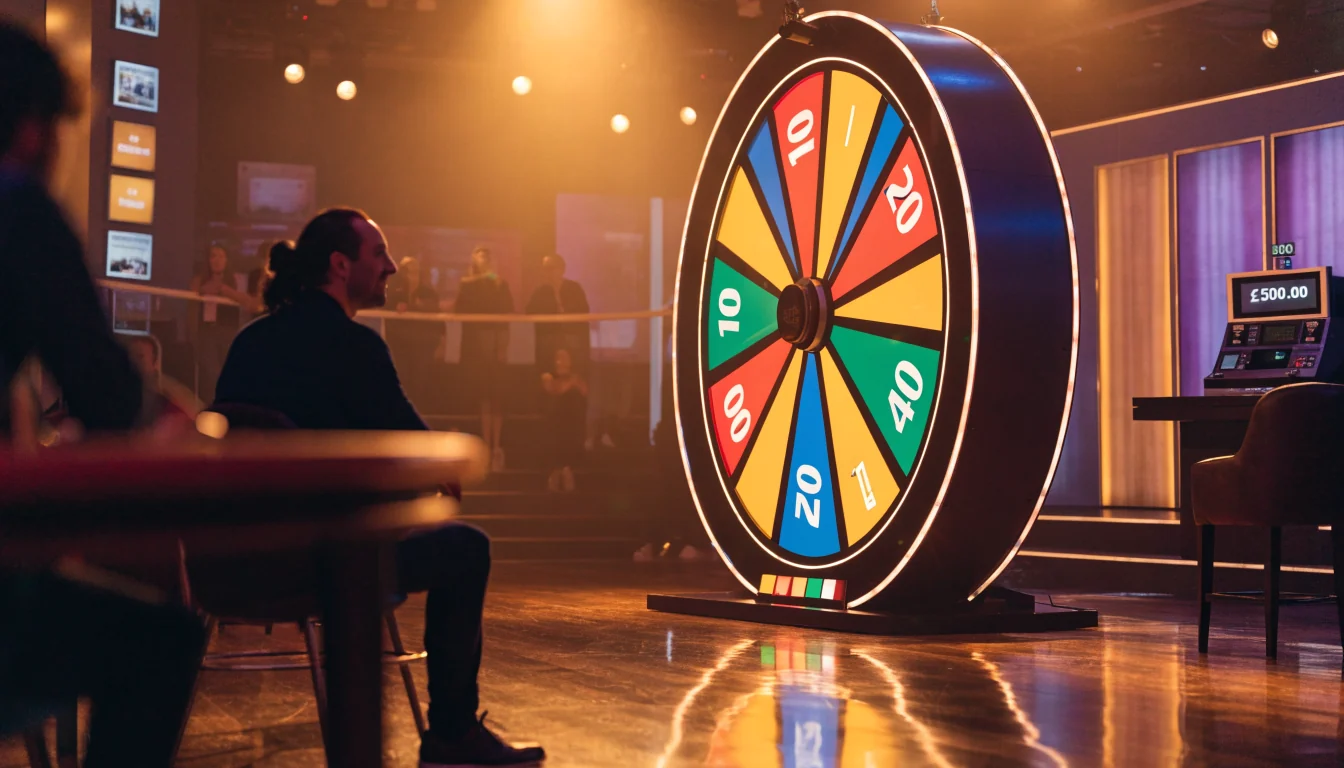
Table of Contents
- How Dream Catcher Fits into the Live Casino
- What the Dream Catcher Casino Search Actually Tells Us
- Assessing a Casino Without a Top-Ten List
- Dream Catcher Casinos in the UK: What Availability Means
- Playing the Game and the Limits That Apply to Online Slots
- The Wheel: What Can—and Cannot—Be Confirmed
- Checking a Live Casino Site Before Depositing
- A Dream Catcher Demo: Confirm the Mode Before Relying on It
- Reading a Dream Catcher Casino Review Carefully
- Before Starting a Live Dream Catcher Session
How Dream Catcher Fits into the Live Casino
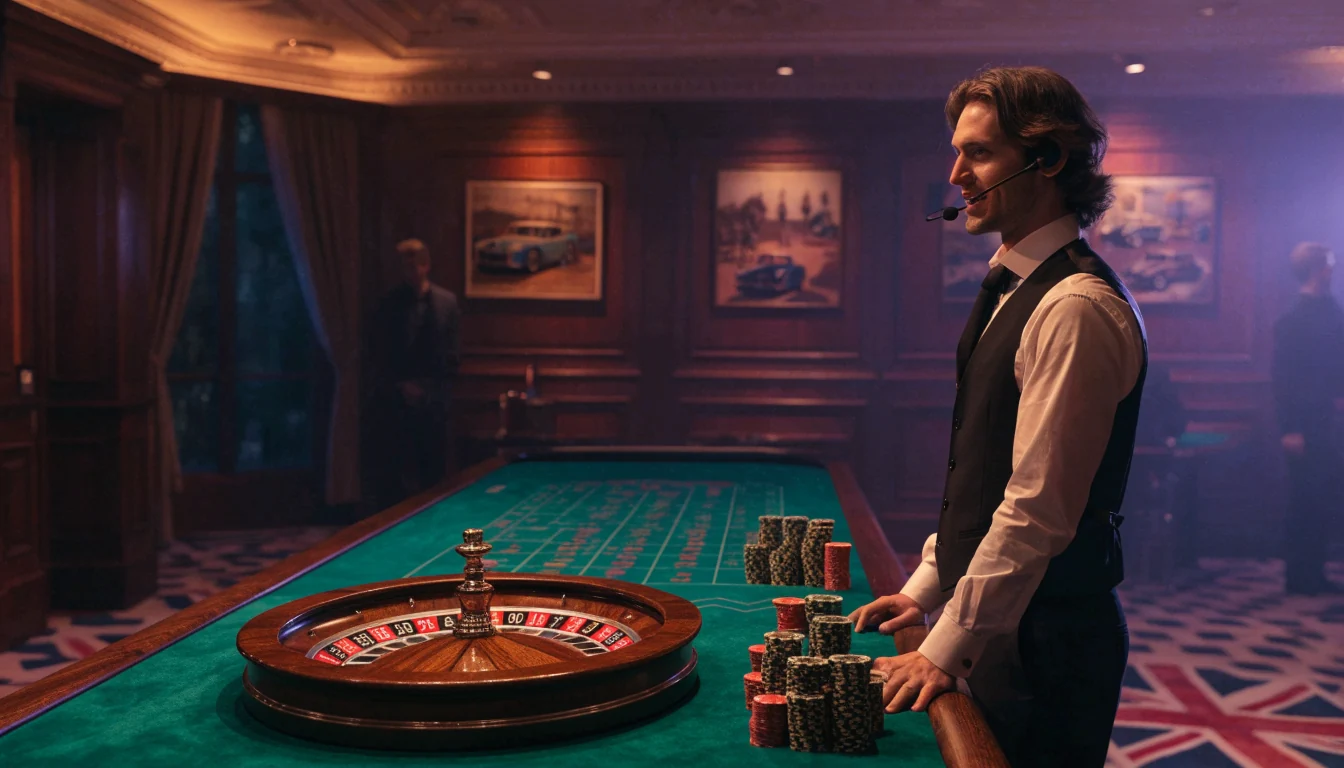
A live casino is best understood as a catalogue, not as one kind of game. It brings casino products together under a shared section of a site, but the label alone does not tell much about the rules or format of any individual title. That distinction matters when Dream Catcher appears beside familiar table games: its position in a live-casino menu does not, by itself, establish how it works.
The surrounding catalogue can help put the name in context. Grosvenor, for instance, first introduced its live casino games in 2013, with card and casino games including Blackjack, Texas Hold’em and Roulette. That history shows how a live offering can encompass several types of casino game rather than a single table format. It does not establish that every operator has the same catalogue, or that Dream Catcher belongs to a particular category beyond being discussed in a live-casino setting.
I have found it useful to separate three things that promotional pages often run together: the casino section, the individual game, and the way a particular operator presents access to it. A live-casino lobby is the organiser. A game is a distinct product within that environment. The operator’s menu, descriptions and access conditions are its own presentation. Treating those as interchangeable leads to assumptions that a catalogue heading cannot support.
This is especially relevant to a title such as Dream Catcher. Its name may be displayed among live products, but that placement alone does not confirm its mechanics, its provider, its available versions or the details of any session. Nor does the general presence of live casino games establish that a given site includes every title associated with the category. A catalogue can vary from operator to operator, and its visible labels are not a substitute for checking the specific product information.
The broader live-casino context is still useful. It explains why a player may encounter very different experiences under one menu heading. Card games and roulette, for example, are distinct casino products, even where they sit within the same live area. The catalogue is a point of entry, not a promise that every product shares the same rules, pace or presentation. The practical implication is simple: category is not mechanics.
Live Baccarat Casinos Online in the UK: Licensing
That distinction also tempers the phrase “live experience”. It can sound like a complete description, when it is really a broad label for the setting in which a product is offered. The label does not answer what decisions are available, what outcomes are possible or how play proceeds. Those details belong to the game’s own information. I would not infer them from neighbouring tiles or from the fact that a site offers other live titles.
There is a commercial reason for keeping the catalogue broad. A casino can arrange different products together so that visitors can browse one section rather than move between unrelated pages. That makes the lobby convenient as a directory, but it can also make unlike products look more similar than they are. Names, thumbnails and short descriptions are designed to help with navigation; they are not necessarily a full account of a game.
So, when Dream Catcher is considered as part of a live casino, the sound starting point is modest: it is a named product being sought within a wider category that can include varied casino games. Grosvenor’s record gives one concrete illustration of that variety, with live card games and roulette in its offering since its launch in 2013. It says nothing further about Dream Catcher itself, and should not be stretched to do so.
The result is a clearer frame for understanding a live-casino catalogue. It can show how an operator groups products and give an idea of the breadth of its offering. It cannot establish the rules or features of a particular title merely through placement. That is a small distinction, but an important one: the catalogue sets the scene; the individual game description must carry the details.
Recommended online casinos
- BritsinoBonus: Welcome Package – Get your £2,200 + 2,000 FS · Payout speed: 1-3 business days
- NightLuckBonus: Welcome Pack + 805% Up To 6400€ + 280 FS · Payout speed: 1-3 business days
- x3betBonus: Welcome Pack 100% Up to £1.000 + 200 Free Spins · Payout speed: 1-3 business days
- SpinFormulaBonus: 550% Up To £15,000 + 550 FS · Payout speed: 1-3 business days
- JetsetspinsBonus: 200% Bonus + 100 Free Spins + Free Royal Wheel · Payout speed: 1-3 business days
- BeOnBetBonus: 100% up to €500 + 100 FS · Payout speed: 1-3 business days
What the Dream Catcher Casino Search Actually Tells Us
A search for Dream Catcher in a live-casino context points to interest in a named game, not merely in live gambling as a general category. Adding “casino” or “live” narrows the subject: the person making the search is trying to connect Dream Catcher with a casino setting or a live-play option. Adding “UK” makes the intended market clearer. It does not, by itself, establish that a particular British casino offers the game.
That distinction matters because a product name can travel further than reliable details about the product. A page title, a casino menu, a promotional banner and an actual playable game are not interchangeable evidence. I have seen how quickly a label can acquire an aura of certainty simply by appearing in several places. Repetition is not confirmation.
Online Casino Games for Real Cash in the UK
The name Dream Catcher identifies the subject of the interest. It does not tell us how the game works, what rules apply, what its visual presentation is, or who supplies it. Those details need documentation tied to the particular game, rather than an inference from the name or from the fact that the search includes “live casino”. A confident description is not stronger evidence just because it sounds familiar.
The wording can also combine several different aims. Someone may be trying to find a casino that lists the game, understand what the game is, or reach a session directly. Those are related intentions, but they require different answers. A page explaining the name does not prove access to a playable session; a casino page that uses the name does not necessarily explain the rules. The phrase “live casino” supplies context, not a complete description.
This is why small wording differences should not be made to carry more weight than they can bear. “Dream Catcher casino” may mean a casino associated with the game, while “Dream Catcher live casino” makes the live setting more explicit. Neither phrase identifies a particular operator or verifies a current catalogue entry. “UK” indicates where the search is focused, not that every result is intended for people in Great Britain or that its claims have been checked against the local market.
The date in a search such as “live Dream Catcher casino UK 2026” is also not proof of a change to the game. It can signal that the person wants information relevant to the year named, but the date alone does not establish that the game has changed, that a listing is current, or that an earlier description remains accurate. A dated headline may simply be a headline. The useful question is whether the information itself is specific and supported.
I treat a game name as a starting point, not as a substitute for its rules or product information. For a meaningful description, the details should be attributable to a dependable game source or to the operator’s own clear information. Without that, statements about mechanics, outcomes, format or studio would be guesswork. Even a broadly plausible account can mislead if it describes another product with a similar label.
Do
- Treat the game name as a starting point
- Seek documentation tied to the specific game
- Use current operator materials for confirmation
Don’t
- Infer mechanics from a category label
- Assume repetition of a name equals confirmation
- Use a dated headline as proof of current rules
There is a second limitation: the search phrase does not reveal what the person already knows. One person may recognise the name and want to locate it; another may have seen it mentioned and want a basic explanation. A useful answer should therefore separate what the wording reasonably indicates from what it cannot establish. It can identify the topic as interest in Dream Catcher within a live-casino context. It cannot fill in missing product details by implication.
That separation is especially important in a market where a casino’s general presentation may be polished while the specific game information is sparse. A page may use “live” as a category label, but the label alone does not explain what a session contains. Nor does a game name establish whether the same title is presented consistently across operators. Those are product-level questions, not meanings hidden inside the search wording.
I would not read the phrase as evidence of a particular wheel, set of outcomes, betting options or game procedure. Those claims need direct support. Nor would I assume that a result using the name is an official description. Search results can bring together operator pages, editorial pages and other material, each with a different purpose. The wording can point towards the subject; it cannot certify the source.
In practical terms, the search is useful as a signpost. It tells us that Dream Catcher and live casino are being considered together, and that “UK” may matter to the person’s intended context. It does not settle the game’s mechanics or establish a specific casino’s offering. Keeping those questions separate is less dramatic than a ready-made description, but more reliable.
Online American Roulette Casinos in the UK: What to Check
A name is not a rulebook.
Assessing a Casino Without a Top-Ten List
A request for the best place to play Dream Catcher sounds as though it calls for a ranked table. In practice, a ranking is useful only when its claims can be checked against the same evidence for every operator. Without that, “best” is a label doing the work of a comparison.
I would start by separating two questions: what a casino offers generally, and what it can be shown to offer for this particular game. A polished live-casino lobby may say little about one named title. Likewise, a page describing a game does not establish that it is available in every account, at every time, or in every version of the lobby. Those are separate claims, and they need separate evidence.
Compare evidence, not adjectives
Casino pages often lean on terms such as “premium”, “seamless” or “exclusive”. They sound like useful distinctions, but they rarely tell much about the actual service. I look instead for information that can be observed and compared: whether the catalogue is clearly organised, whether the game’s rules and conditions are accessible before play, and whether the operator explains how its live-casino products are presented.
The same standard should apply to every casino under consideration. If one operator is judged on its published information and another on a reviewer’s impression, the result is not a like-for-like comparison. A claim about a game should point to a current operator page or an in-account listing, not merely repeat a description copied across several sites.
Comparing casinos requires using the same evidence for every operator to avoid relying on adjectives like "premium" or "exclusive".
That does not mean every relevant detail will be public. It means the comparison should say what it could verify and leave the rest unresolved. A neat table can conceal uncertainty just as easily as it can organise facts.
Look at the wider live offer
A live casino is a catalogue, not a single game. Its range, navigation and explanations affect how easy it is to understand the offer, but those qualities should not be mistaken for proof about Dream Catcher itself. The useful question is whether the operator makes its live products legible: can a player distinguish game categories, find the applicable rules, and tell which information applies to the selected title?
The operator’s broader history may provide context, but it should not be used as a shortcut to a verdict. Grosvenor, for instance, introduced live casino games in 2013, with card and casino games including Blackjack, Texas Hold’em and Roulette. That is a documented point about its live-casino history; it does not establish that a particular game is currently in its catalogue or make it the best choice for that game.
A catalogue may also change. I would treat a current listing as evidence of what appears at the time it is checked, not a permanent guarantee. If a comparison page does not show when its information was checked, that limitation matters.
European Roulette Casinos in the UK: What to Check
Judge the comparison method
A credible comparison explains its criteria before announcing a winner. It should distinguish direct observation from promotional copy, identify what was checked, and avoid turning a general impression into a game-specific claim. “The live lobby is easy to navigate” is an assessment of the lobby. It does not prove that a named title has a particular format, feature or set of betting options.
I also look for consistency. If an article praises one casino for its range but ignores the range at its alternatives, the conclusion may reflect selection rather than comparison. If it calls a casino the best but gives no account of how that judgement was reached, the label is not much help.
There is a further distinction between a strong live-casino service and a strong match for one game. An operator could have a broad catalogue and clear information while still not offering the title being sought. Conversely, a listing for one game alone says little about the wider service. Neither point should be inflated into a ranking.
What a fair verdict can say
For someone comparing places to play Dream Catcher, the most responsible verdict may be narrower than a top-ten list. It can describe what is verifiable about a casino’s live offer, identify the evidence used, and state plainly where game-specific confirmation is absent. That is less dramatic than declaring a winner, but more useful for making a decision.
A genuine comparison would also keep its claims current and apply the same checks to each operator. Where the evidence supports only a general observation, the wording should remain general. Where a title-specific detail cannot be confirmed, it should not be filled in with assumptions about how live games tend to work.
Comparison Method
- Criteria should be explained before announcing a winner
- Direct observation must be distinguished from promotional copy
- Consistency in checking range and details across all alternatives is essential
- A strong general service does not guarantee a match for one specific game
I have seen rankings make uncertainty look settled simply by putting it in a column. A score is still an opinion unless its basis is clear. The label comes last.
Dream Catcher Casinos in the UK: What Availability Means
A search for a casino carrying Dream Catcher is a request for a current product listing, not evidence that any particular operator has one. The distinction matters. A page can use the game’s name in a headline, review or promotional description without showing that it is available to play from that casino account.
I have seen catalogue language treated as if it were a live inventory. It is not. Casino pages can remain indexed after an offering changes, and a general live-casino page may describe a category rather than list every game currently accessible. Even a mention of Dream Catcher on an operator’s site needs context: is it a present listing, an old article, or a reference that does not lead to a playable game?
For a UK player, “available” also has a regulatory meaning. Remote gambling operators serving consumers in Great Britain must hold the relevant Gambling Commission licence, regardless of where their equipment is located. So two separate points need to be established: whether the operator is licensed for the market, and whether Dream Catcher is currently in its catalogue. One does not prove the other.
Casino Dice Games in the UK: How They Work
The clearest evidence of availability is a current listing within the operator’s own live-casino lobby, accessible through the relevant account and market version of the site. A search result or third-party directory can help locate a possible listing, but it may not reflect the operator’s present catalogue. Regional versions can differ, and game access may depend on account status or other conditions set by the operator. A name appearing somewhere online is not the same as a playable session being offered to a UK customer.
There is a practical reason to keep those claims separate. Operators promote the breadth of a catalogue, while the working lobby is the place where a customer sees what can actually be opened. In my experience, the gap between a promotional page and a current product listing is where careless recommendations begin. “Available” is a specific claim. It should be tied to a current, observable listing, not inferred from a general description of live games.
The name itself does not establish who supplies the game, how it is presented, or which options appear at a particular casino. Those details need to be confirmed in the operator’s own current materials rather than borrowed from a description of another site. Nor does a casino’s wider live offering establish that it includes this particular title.
The sensible reading of a list of Dream Catcher casinos is therefore provisional: each named operator is a candidate to check, not proof of access. The listing should be current, apply to the UK-facing service and lead to the game itself. If any of those links is absent, availability remains unconfirmed.
A listing is not access. And access is not a recommendation. Gambling should be limited to money that can be afforded to lose.
Responsible Gambling
Gambling should be limited to money that can be afforded to lose.
Playing the Game and the Limits That Apply to Online Slots
A person looking to play Dream Catcher in a live casino needs to separate two questions: what the particular game involves, and what rules apply to a category of online gambling. A live presentation alone does not settle that classification.
That distinction matters because a named game can be marketed alongside slots without necessarily being subject to the same rules. I have seen product labels treated as if they explained the underlying format. They do not. The classification of the game, rather than a casino menu heading or promotional description, determines which rules are relevant.
A specialist casino review reports that the Great Britain online-slot stake cap is £5 in a game cycle for adults aged 25 or over, and £2 for adults aged 18 to 24. The same review says those caps do not cover roulette or blackjack. These are claims from a review, not a basis for assuming Dream Catcher falls into any one of those categories. The distinction is material: applying a slot limit to a game that is not a slot would be as misleading as overlooking it where it does apply.
For online slots in Britain, autoplay is not permitted, and at least 2.5 seconds must pass between the beginning of one game cycle and the start of the next. Those requirements concern online slot play generally. They should not be presented as a description of Dream Catcher’s pace or controls unless the game’s classification and implementation are established.
The practical point is to look for the game’s own rules and the operator’s explanation of its format before treating a stake figure as applicable. A displayed wager, a stated maximum and a regulator’s category are different things. The first is a choice presented within a game; the second describes a limit; the third determines which regulatory treatment applies. Promotional copy can blur these distinctions. The wording matters.
Online Casino Tournaments in the UK: Formats and Rules
For a player, this means that “play” is not a complete description of what is being offered. A live casino listing may establish that a title is available, but it does not by itself confirm whether the session is classified as a slot, roulette or another casino game. Nor does a general slot rule establish the game’s available wagers or mechanics. Those details need to come from the specific game information, rather than an inference from its name or visual presentation.
I would not use the online-slot limits as a shortcut for judging a Dream Catcher session. First establish how that particular game is classified; then apply the rules relevant to that category. Until that is clear, the reported caps are useful context for online slots, not a verified description of Dream Catcher.
The Wheel: What Can—and Cannot—Be Confirmed
The word “wheel” can make a game sound self-explanatory. It is not. A title may lead people to expect a circular feature, but the name alone does not establish what appears on screen, how it is divided, what its outcomes are or how a wager is placed. Those details belong to the game’s rules and presentation, not to an assumption drawn from its name.
I have learned to separate a familiar label from the thing a casino actually offers. “Live” describes the kind of experience a person may be looking for; it does not, by itself, explain the wheel’s design or the role it plays. Nor does a casino page using the game name prove that every detail shown in a video, image or third-party description matches the version available there.
The useful check is the information attached to the specific game at the operator: its rules, help panel or other explanation of play. That is where the available outcomes and wager choices should be made clear before money is committed. If the description is too thin to explain them, the sensible response is not to fill in the blanks from another game with a similar name. A familiar format is not proof of identical rules.
Live Casino Lightning Roulette in the UK: What to Check
There is also a difference between a wheel shown as part of a live presentation and a wheel that determines a particular result. Visual prominence does not settle the mechanics. Neither does a promotional image. I would treat both as presentation until the game’s own rules explain what the feature does.
This matters because wheel-based games can be easy to describe loosely and hard to compare accurately. A casino listing may use the title without setting out enough detail to establish the layout, possible results or available wagers. That does not justify inventing a version from memory; it means the operator’s game information needs to carry the explanation.
No guesswork.
The same caution applies to recordings and screenshots. They can show what appeared in one moment, but they do not necessarily establish the full set of outcomes or current rules. A live session may also be presented differently from a static promotional image. The reliable point is narrower: the title identifies the product being discussed, while the rules for the version actually offered explain how its wheel works.
Until those rules are clear, claims about its segments, results or betting options should be left aside. A game name is not a rule sheet, and an image is not a complete account of play. Any wager should come only from money that can be afforded to lose.
Checking a Live Casino Site Before Depositing
A live casino’s game lobby can look polished while leaving the operator behind it unclear. I treat the licence as the first check, not a badge in the footer. The UK Gambling Commission regulates commercial gambling in Great Britain, including remote gambling offered to people there, even when the operator’s key equipment is located elsewhere. It issues operating licences to businesses and personal licences to individuals.
The operator’s name and licence number should match an entry on the Commission’s public register. I would verify the number there before depositing, then check that the registered business corresponds to the site being used. A logo alone proves little. This check establishes the regulatory position; it does not establish that a particular casino carries Dream Catcher.
Verifying an Operator
- Match the operator name and licence number on the UK Gambling Commission register
- Confirm the registered business corresponds to the site used
- Verify that financial limit prompts are active during the account process
- Check that the payment method does not bypass credit-card restrictions
- Ensure accessible tools for self-exclusion and dispute resolution are provided
Account safeguards show how the rules work in practice. An operator must verify a customer’s age before allowing a deposit. New customers must be prompted to set a financial limit before their first deposit, and account-level limit controls must remain accessible. Those steps should be visible in the account process, not buried in promotional copy.
Payment methods are another useful test. UK-licensed remote operators cannot accept credit-card payments for gambling, including credit-card funding routed through a money service business. They also cannot accept wallet payments where the wallet permits credit-card funds to be used for gambling. A payment route that appears to bypass the restriction is a reason to pause.
The site should explain how complaints are handled internally and how to reach an approved Alternative Dispute Resolution service if the complaint remains unresolved. UKGC licensees must also provide responsible-gambling tools, including self-exclusion. Those are account protections, not decorative links.
There is an industry obligation behind the scenes, too: operators must contribute to the Research, Education and Treatment levy. It is part of the regulatory framework, rather than a feature that makes one casino’s game catalogue more dependable.
I separate these checks from claims about a live game. A valid licence confirms the operator’s regulatory status; it does not confirm that Dream Catcher is available, or that a particular live table is operating. Two different checks.
A Dream Catcher Demo: Confirm the Mode Before Relying on It
A demo can mean different things on a live casino page. It might be a free-play mode, a preview of the interface, or simply a promotional label. The name alone does not establish which, if any, is available for Dream Catcher. That distinction matters: a screen that resembles a playable table may not offer the same access or features as a real-money session.
I have learned to treat “demo” as a mode description that needs checking, not as a promise. Before relying on it, look for clear wording explaining whether play is free, whether an account is required, and what happens when the session ends. If the page does not explain those points, the label tells little.
Mines Casino Game UK: Demo, Rules and Randomness
A live casino demo may also differ from a conventional digital game preview. The word “live” can describe the category a player is looking for, but it does not by itself confirm a particular presentation, interaction or set of options. Those details should be visible in the provider or casino’s own description, rather than inferred from the title.
There is a practical boundary here. Free access does not automatically mean that every feature is available, that play can be resumed later, or that a demo reflects the real-money experience. Nor does a demo establish that the same game can be opened for paid play at that casino. Mode and availability are separate questions.
I would check the page’s actual controls and terms before treating a demo as a way to learn the game. If it offers only a video or static preview, that is not the same as interactive play. If it opens a playable mode, its displayed rules and options—not assumptions based on the word “demo”—are what matter.
Keep the distinction simple: a Dream Catcher demo is a specific access mode, not a guarantee attached to the game’s name. Where the page does not state what the mode includes, there is no sound basis for relying on it. No guesswork needed.
Reading a Dream Catcher Casino Review Carefully
A Dream Catcher casino review is useful only when its claims can be separated from its descriptions. I look first for statements that can be checked independently: the operator’s legal name, the site covered by the review and whether the relevant business appears on the UK Gambling Commission’s public register. The Commission regulates remote gambling offered to consumers in Great Britain, and operators serving that market need the appropriate licence. A review repeating a badge or licence number is not the same as verifying the entry.
The distinction matters because a review may combine firm regulatory information with game-specific language that sounds equally definite. Claims about Dream Catcher’s rules, presentation, provider, wheel or available wagers need supporting material that actually relates to the game and the version being discussed. Without that, colourful detail is still just description. I would not treat a review’s confident tone as proof.
The same applies to statements that a casino carries the game. An operator’s catalogue can change, and a review may refer to a different site, account area or point in time. The useful evidence is a clear, current reference to the actual offering—not a general claim that the casino has live games. Keep availability separate from the review’s opinion of the experience.
Crazy Time Live Casino Game Show in the UK
I also read the commercial framing. Words such as “trusted” or “best” may be promotional labels rather than conclusions supported by specific checks. A strong review shows what was examined, identifies what could not be confirmed and avoids turning impressions into facts. That is more valuable than a long list of adjectives.
A review can inform a decision, but it cannot replace the underlying records or establish game details by assertion. My rule is simple: treat licensing as something to verify against the regulator, and game descriptions as claims requiring game-specific evidence. Then weigh the opinion accordingly. No borrowed certainty.
Gambling should remain a choice made within personal means; only gamble what can be afforded to lose.
Before Starting a Live Dream Catcher Session
A page about Dream Catcher is not the same as an available, playable session. Casino sites can mention a title in promotional copy, a review or a catalogue page without showing that it can be opened for play. I treat the name as a starting point, not confirmation.
Before committing to a session, check what the casino actually displays after sign-in: whether Dream Catcher appears as a playable option, whether the game opens, and whether its own rules and wagering information are available. A listing alone does not settle those points. Nor does the word “live” establish what the session contains; the game’s presentation and terms need to be visible at the point of play.
I would also avoid making a deposit just to test a vague promise. If the title cannot be found in the live lobby, or the available information does not match the intended game, stop and clarify the position with the operator rather than assuming access will follow. That is a small distinction, but it matters when marketing language is broader than the product actually offered.
A live session should begin only when the game and its terms are clear, and the stake fits within a personal spending plan. There is no need to chase a session that is not plainly available. No guesswork.
Gambling outcomes are uncertain, and a live presentation does not change that. Only gamble what you can afford to lose.
Are online casino games licensed and regulated?
Yes. The UK Gambling Commission regulates online gambling offered to consumers in Great Britain, and remote operators serving them must hold the relevant licence.
What are the online slot stake limits in Great Britain?
The limit is £5 per game cycle for adults aged 25 and over, and £2 for adults aged 18 to 24. These limits do not apply to roulette or blackjack.
Is LuckyPays licensed by the UK Gambling Commission?
The Commission’s public register dated 26 September 2026 does not list LuckyPays under its brand or stated domain, including luckypays.io.
Created by the ”Avantgarde Casino” editorial team.