Online Bingo UK: Cards, Slots and Offer Terms
 Available in GB
Learn how card patterns determine bingo prizes, how slots fit alongside bingo, and why bonus conditions and account controls matter.
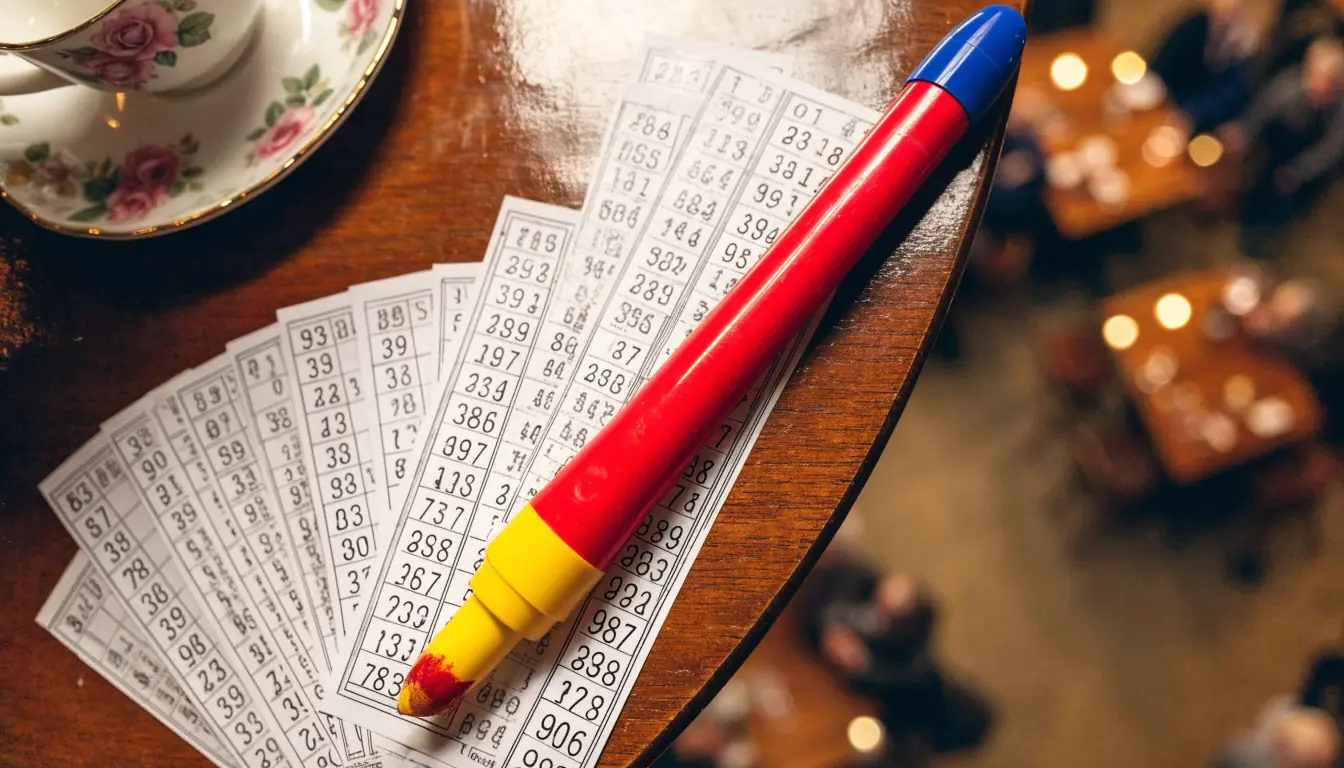
Table of Contents
- Bingo formats: cards, patterns and prize conditions
- Where bingo and casino games meet
- Slots alongside bingo: what the combination means
- Playing bingo and slots for real money
- Assessing bingo sites that also offer slots
- Free bingo tickets and slot spins: read the conditions
- Bingo-themed slot machines and how they play
- Can a bingo account include slot games?
- Mobile bingo and slots: account controls matter
- No-deposit bingo and slots offers: what the headline leaves out
Bingo formats: cards, patterns and prize conditions
The number of balls tells only part of the story. What changes from room to room is the ticket layout and the condition that turns a marked card into a prize. I have found it useful to read those rules before treating two games with the same ball count as interchangeable.
In 90-ball bingo, each ticket has three rows and nine columns. Prizes are awarded in stages: first for completing one line, then two lines, and finally the full house, when every number on the ticket has been called. That sequence gives the round several possible winning points. A full house is not the only result that matters.
75-ball bingo uses a five-by-five card, with wins tied to completing a specified pattern rather than simply filling rows. A room might set a cross, an X, a diamond, a letter T or a picture frame as the target. The pattern is part of the game’s prize condition, so the same card can be close to a win in one round and irrelevant to the target in another. The room rules decide which marks count.
80-ball bingo also centres on patterns, but its card is described as an eight-by-four grid. Targets can include four corners, a letter shape or the full card, often highlighted with colours on the screen. That visual cue helps show what is being completed; it does not change the need to match the stated pattern.
There is a discrepancy worth noticing: some descriptions of 80-ball bingo refer to a four-by-four grid, while the format is also specified as an eight-by-four grid. Those layouts are not the same, so the displayed ticket and the room’s rules should be treated as decisive rather than relying on a short label.
The practical distinction is simple. In 90-ball games, progress is measured by lines and then a full house. In 75-ball and 80-ball rooms, the named pattern governs the win. I check the prize stages and the target before buying a ticket; otherwise, a familiar ball count can create the wrong expectation. Clear rules matter.
Online American Roulette Casinos in the UK: What to Check
Where bingo and casino games meet
An online bingo and casino site is not simply a bingo room with a casino tab added afterwards. The two products serve different rhythms. Bingo is organised around a shared event: tickets are bought, numbers are called, and players follow the same round. Casino games are generally self-contained, with each player choosing when to start and stop. Putting both in one account makes the catalogue broader, but it does not make the games interchangeable.
From the operator’s side, bingo gives the site a social centre and a schedule. Rooms have a recognisable identity, and the draw gives players a reason to return at a particular time. Casino products provide activity between rounds or for people who want a different pace. That arrangement can make the site feel like one joined-up venue, though the underlying products still have their own rules, presentation and terms.
The distinction matters when a site uses labels such as “bingo casino” or “casino bingo”. Those phrases can describe a casino site that includes bingo, a bingo-led site with casino games, or a lobby that places both under one account. The label alone says little about which product is central. In practice, the balance is clearer from the room list, how prominently each category is presented, and whether bingo remains easy to find once the wider casino catalogue is open.
Bingo itself has not changed at its core: a ticket is matched against drawn numbers, and a win depends on completing the relevant pattern ahead of other players. Casino games do not share that communal result. They may sit beside a bingo room, but their outcomes are separate. That separation is useful to understand: activity on one side does not make a bingo ticket more likely to win, nor does a bingo round alter the outcome of a casino game.
Bingo provides a social centre and schedule, while casino products offer activity between rounds or a different pace.
Side games can fill the gaps around a bingo session, but their presence is not automatically an improvement. They may add variety for someone who wants more than the main room; they can also draw attention away from the event that brought the player to the site. In my experience, placement is often the real design decision. A prominent casino panel can make a bingo-led brand feel like a general gambling platform, while a restrained one leaves the room as the obvious centre.
There is also a financial distinction hidden by the shared lobby. Return-to-player figures are not a single rating for an entire site. They refer to a particular game or product, and side games can return a smaller proportion of stakes over time than the bingo room. That comparison does not predict what happens in an individual session, and it should not be read as a promise about a player’s result. It is a reason to treat each product on its own terms rather than assuming that the bingo room’s profile carries across the whole catalogue.
The same caution applies to the word “community”. Bingo can feel more social because players share a live draw and room chat may be available. A casino product placed next to it may have a different, more individual experience. A combined site can offer both, but the interface does not erase that difference. The social element belongs to the room and the way it is run, not automatically to every game on the account.
Online Casino Without ID in the UK: Checks Explained
For UK players, the regulatory position applies to the operator offering the gambling, not just to the part of the site that looks most familiar. Online bingo is legal in the United Kingdom within a heavily regulated market. An operator serving UK players must hold the appropriate, separate UKGC licence; a bingo presence does not substitute for authorisation to offer casino products. UKGC requirements cover matters including fairness, anti-money laundering and responsible gambling.
That is why a combined catalogue should be understood as a set of distinct products under one operator, rather than one blended game. The rooms may share branding, navigation and an account, but they do not share every rule or risk profile. A site’s strongest feature may be a well-run bingo room; its casino range may be extensive, or merely an addition. The useful question is not how many categories appear in the menu, but whether the mix suits the kind of session the site is designed to support.
More choice, not one product.
Slots alongside bingo: what the combination means
On a bingo-led site, slots are a separate product, not another way of playing a bingo round. The distinction matters: bingo play is organised around tickets, number draws and shared patterns, while a slot game presents a sequence of individual game cycles. Putting both in one account does not make their rules interchangeable. I have seen the menu do more persuasive work than the terms: a single lobby can make very different products look like one continuous session.
The practical question is what happens once a slot is opened. In Britain, each spin must take at least 2.5 seconds, and autoplay is banned. That rules out setting a machine to keep spinning unattended. The player has to start each cycle, and the next cannot begin instantly. These are not optional settings tucked away in a game menu; they are restrictions on how online slots may operate in the market.
In Britain, each slot spin must take at least 2.5 seconds, and the use of autoplay is banned.
There is also a stake ceiling for each game cycle. Since 9 April 2025, the maximum is £5 for all adults. Before that change, the applicable cap depended on age: £5 for customers aged 25 and over and £2 for those aged 18 to 24. The limit concerns a single cycle, not a site-wide allowance shared across bingo and slots. A combined lobby can obscure that distinction, but the slot rules attach to the slot game.
That is one reason a familiar-looking interface should not be mistaken for a single set of mechanics. Bingo rooms and slot titles can sit beside one another, but the slot’s pace, stake control and cycle are governed by the slot rules. A bingo ticket does not turn a slot spin into a bingo play, and the presence of a bingo room does not create an exception to restrictions on slots. Separate products. Separate treatment.
What the British rules change
Autoplay is often presented as a convenience in markets where it is permitted. In Britain, it cannot be offered for online slots. Removing it makes the player’s involvement in each game cycle explicit; it also prevents a sequence of spins being launched automatically while attention is elsewhere. The minimum spin duration works in the same direction: each cycle takes time, rather than being designed to finish and restart at once.
Online Casino Tournaments in the UK: Formats and Rules
The stake cap is another product-level safeguard, not a promise about how much a session will cost. The allowed stake for a cycle is not a spending target or a recommended amount. Nor does it tell anyone how long a session will last. The controls and rules limit certain features; they do not determine the outcome of a game or make gambling predictable. That distinction can disappear in marketing copy. “Controlled” describes the permitted mechanics, not a controlled result.
The legal framework sits behind those mechanics. Remote operators offering gambling to customers in Great Britain must hold the relevant UK Gambling Commission licence, wherever the operator is based. Online gambling in the UK is legal at licensed and regulated sites for people aged 18 and over. Operators must verify age before allowing a customer to deposit, and a UKGC-licensed operator must verify identity. These checks are part of the account process, not a feature unique to bingo or slots.
Credit card gambling is banned in the UK. Remote gambling operators cannot accept a credit-card payment for gambling, including credit-card funding routed through a money service business; they also cannot accept wallet payments where credit-card funds can be used for gambling. That applies even when the slot is reached through a bingo-branded account. The branding does not change the payment rule.
A shared lobby, not shared rules
I treat the lobby as a directory rather than evidence that every game follows the same operating conditions. A site may place slots close to bingo rooms to make switching simple, but convenience does not alter the slot’s minimum duration, autoplay ban or stake cap. The product can be presented together; its mechanics remain distinct.
Shared Lobby
Convenience of a shared lobby does not alter the distinct operating conditions and rules of different products.
The same applies to the word “casino” when it appears beside bingo. It is a label for a broader catalogue, not a statement that the products have identical rules. A slot remains a slot for the purposes of its cycle and stake limits. A bingo room remains a bingo room. That separation is useful when reading the game information: the title and the operator’s wider brand do not replace the rules attached to the individual product.
For someone comparing sites, the useful distinction is not how many games appear on one screen. It is whether the slot experience is presented within the British framework and whether its functions match the rules that apply here. A fast-looking interface cannot lawfully remove the minimum spin duration; a repeated-play button cannot restore autoplay. If a site offers real-money play to Great Britain customers, it must be operating under the relevant UKGC licence.
There is no need to infer that slots are an extension of bingo simply because they share an account or lobby. They are adjacent products with different play cycles. The shared setting changes navigation, not the core restrictions. That is the combination in plain terms: one place to find both, but no blending of the rules.
Playing bingo and slots for real money
Real-money bingo has a small entry point and a wide range of possible ticket prices. Low-stakes rooms can charge from 1p to 5p per ticket, while premium games may cost £1 or more. That difference changes the amount committed to each game, but it does not create a direct promise of a larger return. A higher ticket price is only one part of the prize structure.
European Roulette Casinos in the UK: What to Check
The core transaction is straightforward: a player buys a ticket, numbers are drawn, and a prize depends on completing the required pattern before other players. The spending decision comes before the draw. Buying more tickets raises the total cost of taking part, while the outcome remains uncertain. In my experience, that distinction is easy to lose when a room foregrounds a large prize and leaves the ticket cost visually secondary.
Prize amounts can vary sharply between games. A specialist review has described a 1p game with a £10 full-house prize and a £1 game with a jackpot in the hundreds or thousands. Those figures are illustrations from that review, not a stable market scale or a prediction of what any current room will pay. The operator’s live game information is the relevant place to check the prize attached to a particular session. The headline is not the whole calculation.
A prize pool and an individual ticket’s prospects are also different things. A large advertised prize says what may be won under the stated conditions; it does not say how likely a ticket is to win. The number of tickets in play, the game’s rules and the pattern needed to claim a prize all matter. I would separate those details before comparing rooms, rather than treating the biggest displayed amount as the best value.
Do
- Compare total participation cost against stated prizes
- Check live game information for current prizes
Don’t
- Treat the biggest displayed amount as the best value
- Use a single ticket price in isolation for comparison
Ticket limits can shape spending too. Rooms may cap how many tickets one player can buy in a game, and the cap can depend on ticket price. That is a practical boundary, not a budget recommendation. A low price per ticket can still add up when several are bought, while a premium ticket makes each purchase more consequential. The useful comparison is the total cost of the intended participation against the stated prizes, not the price of one ticket in isolation.
Slots may sit beside bingo in a real-money account, but their presence does not change the cost or prize terms of a bingo ticket. It is better to keep the two activities separate when tracking spending: bingo purchases belong to the room and its draw, while slot play has its own game rules. A combined balance can make that separation less visible. The money remains real either way.
For recreational players in the United Kingdom, bingo winnings are not taxable. That does not make a prize guaranteed, nor does it change the amount spent to enter a game. Online gambling is for adults aged 18 or over and must be offered by a UKGC-licensed operator. These are conditions of the market, not a reason to treat gambling as income.
The practical measure is the amount committed before a game begins, not the prize figure used to sell the room. Small tickets can still accumulate; large prizes can still be rare. Keep the distinction clear.
Live Casino Lightning Roulette in the UK: What to Check
Assessing bingo sites that also offer slots
I do not treat a polished lobby or a long game list as evidence that a site is safe to use. When assessing a bingo operator that also offers slots, I start with the legal identity behind the brand. A site serving UK players must hold a UKGC licence; the operator needs the relevant licence for its services, not merely a familiar name or a reassuring badge on a promotional page.
The footer is the first practical check. The UKGC licence number should be displayed prominently there. If it is missing, I close the tab rather than trying to infer legitimacy from customer reviews, social media or the appearance of the site. A number is only a starting point, though. I verify it against the UK Gambling Commission’s public register and confirm that the registered business corresponds to the operator behind the site. A brand name and a company name may differ, so the connection needs to be clear.
That distinction matters with new bingo sites as well as established brands. A launch announcement, a new design or a fresh selection of games does not establish that the business can legally serve customers in Britain. The licence check is more useful than the age of the brand. I look for a traceable operator and a current licence, not just a claim that the site is “new” or “trusted”.
The licence is not a decorative credential. UKGC requirements address fairness, anti-money laundering and responsible gambling. Those obligations form part of the operating framework; they are not proof that every individual experience will be trouble-free. My assessment therefore continues with the account process and the routes available if something goes wrong.
Assessing Bingo Operators
- Verify the UKGC licence number in the footer
- Confirm the registered business on the UKGC public register
- Check for a stated internal complaints process
- Ensure the operator provides an approved ADR service
Identity checks are part of that process. A UKGC-licensed operator must verify a player’s identity, and the operator must establish age before allowing a deposit. The checks commonly involve photo identification and proof of address. This can feel like friction during registration, but it is a regulatory control rather than an optional extra. A site that appears to allow deposits before age verification deserves close scrutiny.
I also check whether the operator explains how verification works and provides a clear way to resolve an account issue. A request for documents should sit within a recognisable account process, not arrive as an unexplained demand through an unrelated channel. The point is not to assume misconduct; it is to see whether the operator makes its procedures intelligible.
Complaints handling is another useful test. UKGC licensees must provide an internal complaints process and access to an approved Alternative Dispute Resolution service. The site should explain how a complaint is submitted and what happens if the internal response does not resolve it. If those details are buried or difficult to locate, that is a weakness in the information available to customers, even if the licence itself checks out.
Payment information can also expose careless or misleading presentation. Credit card gambling is banned in the UK, and remote operators cannot accept credit-card payments for gambling, including through a money service business. Nor can they accept wallet payments where credit-card funds can be used for gambling. A payment page that suggests otherwise is a serious reason to stop and recheck the operator and its terms.
Mines Casino Game UK: Demo, Rules and Randomness
I would not produce a “best” list by ranking sites on appearance or game count. For bingo and slots together, the more dependable comparison is whether the operator is identifiable, its UKGC licence number is visible and verifiable, age and identity checks are properly explained, and complaints have a stated route. Those checks do not promise a perfect service. They establish whether the basic safeguards are present. A useful filter.
Free bingo tickets and slot spins: read the conditions
A free bingo ticket is not necessarily valid in every room. A specialist offer review describes tickets restricted to named rooms or ball types, with some expiring after 24 hours. The restriction determines where the ticket can be used; the expiry determines whether it has any value if the matching game is missed. Those details sit in the offer terms, not in the word “free”.
The ticket itself cannot be withdrawn. If it wins, the winnings are credited as cash, but that does not automatically make them ready to withdraw. A specialist review reports that ticket winnings may carry a wagering requirement, with cited terms ranging from 20x to 65x. The practical question is what amount the multiplier applies to, which games count towards it, and whether a cash-out is blocked until the requirement is met. A headline that mentions a free ticket does not answer those points.
Free ticket winnings may carry wagering requirements, often ranging from 20x to 65x.
The terms may also connect ticket winnings to the wagering requirement attached to a deposit bonus. That is a separate condition from being allowed to enter a bingo room with a free ticket. I have seen the distinction get lost in promotional wording: the ticket is free to use, while any resulting balance can still be subject to play-through conditions. Read the winnings clause, not just the ticket description.
Some rooms have also been reported by specialist offer reviews to award a free slot spin for each bingo ticket bought. That is not the same as a free ticket: the spin is tied to a purchase, and its own terms determine the eligible game and treatment of any winnings. The word “free” describes the added spin, not necessarily unrestricted cash.
For anyone comparing free online bingo and slot games, the useful check is the sequence of conditions: which room accepts the ticket, when it expires, what happens to a win, and whether a related spin has separate restrictions. If the offer gives a free ticket for a particular ball type, a ticket for another format may not qualify. If it awards a spin per ticket, buying tickets to collect spins changes the cost calculation; the spin is an extra, not a reduction in the ticket price.
I treat free online bingo slot machines claims with the same care: the wording can blur a bingo ticket, a slot spin and the winnings from either. They are different things, and each may have a different route to withdrawal. Read the terms attached to the specific reward. Small print matters.
Plinko Casinos in the UK: Regulation and Play
Bingo-themed slot machines and how they play
A bingo-themed slot borrows its visual language from bingo: numbered balls, cards, halls and calls may appear in the artwork or animation. That does not make it a bingo round. The player is using a slot game, and the outcome comes from the slot’s own mechanics rather than from completing a shared bingo pattern ahead of other players.
The distinction matters because a familiar theme can make a game feel more recognisable than it is. “Bingo” on the title screen describes the presentation, not a change in how the product is regulated or played. I have seen that label do useful work for operators: it signals a link to a known pastime, while the game itself remains a slot. Different product underneath.
The practical rules are the British slot rules. Autoplay is banned, so a game cannot be set to run a sequence of spins without a fresh player action for each one. Each spin must also take at least two and a half seconds. That sets a floor on the pace; it is not a promise that a spin will produce a win or a particular result.
Stake limits apply by age. The maximum stake per game cycle is £5 for customers aged 25 and over, and £2 for those aged 18 to 24. The higher limit came into force for all adults on 9 April 2025, but the lower limit remains for the younger group. A themed game does not sit outside those restrictions.
Stake Limits
The maximum stake per game cycle is £5 for adults aged 25 and over, and £2 for those aged 18 to 24.
I treat the theme as a presentation choice, not a guide to the game’s behaviour. Artwork may suggest a bingo hall, but it cannot establish how often features occur, what a symbol pays or how volatile the game is. Those details belong to the game information and rules, which should be read separately from the graphics.
The legal frame is also part of the product. Online gambling in the UK is for adults aged 18 and over at sites holding a UK Gambling Commission licence. A bingo motif does not change that requirement, or turn a slot into a different category of play. Familiar look; slot rules.
Can a bingo account include slot games?
Yes. A bingo account can provide access to slot games as well as bingo rooms, though the mix depends on the operator. The important distinction is between having both products under one login and tying a slot play directly to a bingo purchase. Those are not the same arrangement.
In the first case, bingo and slots sit in separate parts of the account. A player can move between them, but buying a bingo ticket does not necessarily trigger a slot spin. I have seen promotional wording blur that distinction: “bingo and slots together” can mean little more than two product areas sharing an account.
A more direct link is possible. One specialist review described rooms where a free slot spin was offered for each bingo ticket bought. That is a specific promotion, not a feature to assume comes with every room or every ticket. The trigger matters: if the spin is attached to a purchase, it is not simply a free-standing slot offer.
Best Keno Online Casinos in the UK: What to Check
The practical check is to open the room’s information and the promotion’s terms before buying. The account should make clear whether the spin is credited automatically, where it can be used, and whether it is limited to a particular slot. Those details determine whether the extra play is genuinely part of the bingo session or a separate offer with its own restrictions. The headline alone does not settle it.
I would also keep the two balances and activities mentally separate. A bingo ticket enters a draw; a slot spin is a different product, even when the operator presents them as a joined-up experience. Treating the spin as a reason to buy more tickets can make the ticket decision harder to assess on its own.
So the answer is yes, but the connection may be only shared account access—or a specific ticket-linked spin. Read the wording as a description of the mechanism, not as a promise that every bingo purchase comes with slot play. Small distinction. Big difference.
Mobile bingo and slots: account controls matter
A mobile screen makes account controls easy to overlook: the game fills the display, while limits may sit behind a profile menu. I treat the limit-setting step as part of account setup, not an afterthought. Remote operators must prompt new customers to set a financial limit before their first deposit and make account-level limit controls accessible.
Managing Deposit Limits
Deposit limits control the amount added to an account over a chosen period (daily, weekly, or monthly). It is important to verify if the setting blocks further deposits immediately upon reaching the limit and how changes to the limit are activated.
A deposit limit controls how much can be added to the account over a chosen period. Operator help pages and account settings commonly describe daily, weekly or monthly options, though availability and the way a limit takes effect can vary. The key detail is the boundary: whether the setting blocks further deposits once reached, and when a changed limit becomes active. A control that is hard to find or easy to misread is less useful than its label suggests.
On a phone, it is worth checking that the limit applies across the account rather than only to one game or one section of the site. Bingo and slots may sit in separate menus, but the money used for both can come from the same balance. A single account-level limit gives a clearer view of total deposits than treating each activity as a separate budget.
I have seen “flexible” used as a selling point. In practice, flexibility can mean that settings are adjustable; it does not tell us whether a reduction takes effect immediately or whether an increase is delayed. Those mechanics matter more than the label. Read the confirmation screen and the account’s limit page, especially after changing a setting.
Controls need to remain usable after sign-up. A mobile account should make the current limit and the route to amend it visible without requiring a desktop visit. If the option is buried, a saved link or a brief check of account settings can help keep the control in view. The point is not to set a particular figure, but to make the boundary deliberate and reviewable.
Deposit limits are one safeguard, not a substitute for attention to spending. I would check them before playing, then revisit them when circumstances change. Small screen. Same account.
No-deposit bingo and slots offers: what the headline leaves out
A “no-deposit” offer sounds like money or play granted without an initial payment. The important distinction is what can actually be withdrawn. A free ticket is not cash: any winnings may be credited to the account subject to wagering requirements, and the offer terms determine whether they can be withdrawn and when.
Monopoly Live Casino UK: Game and Site Basics
One specialist review describes a new-player package with a £10 cash bonus and 30 free bingo tickets. That is an example reported in a review, not a standard package across the market. The label alone does not explain whether the tickets are restricted to particular rooms, whether the bonus has separate conditions, or whether a deposit is needed to claim part of the deal. Those details sit in the terms.
For deposit-based bingo offers, a specialist review reports wagering requirements ranging from 20x to 65x; some offers count only the bonus funds, while others may define the eligible balance differently. The distinction changes the amount of play required. The same review gives a worked illustration: a £40 bingo bonus with a 4x requirement means £160 of eligible ticket spending before withdrawal. The multiplier is applied to the stated base, not simply treated as a small administrative hurdle.
Timing matters just as much. A specialist review describes a 30-day wagering window, starting when the bonus is credited. In practice, the countdown can begin before the player has chosen a room or understood which tickets qualify. An offer can therefore look generous while leaving little practical time to meet its conditions. Read the expiry point alongside the wagering clause, not as a separate footnote.
The wording around slots needs the same scrutiny. A headline may group bingo and slots together, but that does not establish that every bonus can be used on both products. Terms can specify eligible games, contribution rules and whether activity in one product counts towards wagering at all. If the slot play does not qualify, it will not move the bingo bonus towards withdrawal.
I treat the headline as a label, not a promise. The operative details are the qualifying deposit, eligible play, wagering base and deadline. If any of those are unclear, the value of the offer is unclear too. No shortcut.
Can I play online bingo on my mobile phone?
Yes, you can use free bingo tickets when an offer provides them, although they may be limited to particular rooms or ball types and may expire after 24 to 72 hours.
Can I play bingo without buying a ticket?
Yes, if you have a free ticket from an offer. Free tickets may be restricted to certain rooms or ball types, and any winnings can be subject to wagering requirements.
How do 90-ball and 75-ball bingo differ?
In 90-ball bingo, tickets have three rows and prizes are awarded for completing one line, two lines and then a full house. In 75-ball bingo, the five-by-five card wins by completing the round’s specified pattern, such as a cross or a diamond.
What is a wagering requirement?
It is the amount you must stake on eligible bingo tickets before bonus funds or winnings can be withdrawn. For example, a £40 bonus with a 4x requirement means £160 in eligible ticket spending.
Are online bingo winnings taxable in the UK?
No. Online bingo winnings are not taxable for recreational players in the UK.
Recommended online casinos
- BritsinoBonus: Welcome Package – Get your £2,200 + 2,000 FS · Payout speed: 1-3 business days
- NightLuckBonus: Welcome Pack + 805% Up To 6400€ + 280 FS · Payout speed: 1-3 business days
- x3betBonus: Welcome Pack 100% Up to £1.000 + 200 Free Spins · Payout speed: 1-3 business days
- SpinFormulaBonus: 550% Up To £15,000 + 550 FS · Payout speed: 1-3 business days
- JetsetspinsBonus: 200% Bonus + 100 Free Spins + Free Royal Wheel · Payout speed: 1-3 business days
- BeOnBetBonus: 100% up to €500 + 100 FS · Payout speed: 1-3 business days
Created by the ”Avantgarde Casino” editorial team.