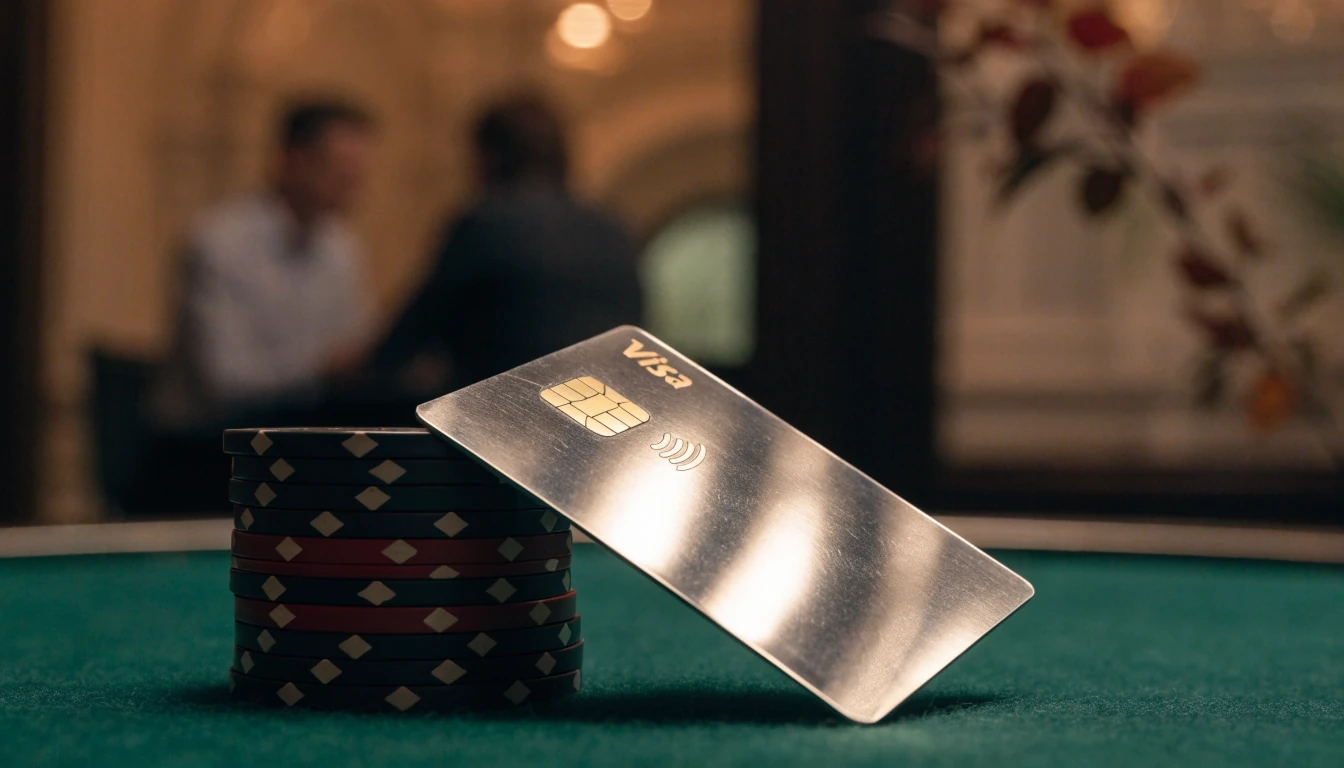
Casinos That Accept Debit Cards in the UK
 Available in GB
Debit and credit cards follow different rules, and accepted deposit methods may not determine how quickly casino withdrawals arrive.

Table of Contents
- How Debit Cards Fit into UK Casino Payments
- Making an Online Casino Deposit by Debit Card
- Checking Whether a Casino Supports the Card in Hand
- Deposit Limits and the Controls Around Them
- Why a Fast Card Deposit Does Not Mean a Fast Payout
- Keeping Deposit and Withdrawal Routes Consistent
- When Another Payment Method May Be More Practical
- How Payment Choice Can Affect Bonus Eligibility
- The Costs Behind a Debit Card Deposit
- Card Ownership, Verification and Payment Security
How Debit Cards Fit into UK Casino Payments
Debit cards remain a familiar way to fund an online casino account in the UK. Visa and Mastercard are commonly accepted, so casinos that accept debit cards in the UK form a substantial part of the payment landscape. That does not make every card interchangeable: the card network is only one part of whether a payment route is available. The distinction between debit and credit is the more important starting point.
A debit card is linked to a bank account and is used to pay from funds available through that account. A credit card, by contrast, draws on a credit facility. Both may carry a Visa or Mastercard logo, but that shared branding does not make them equivalent for gambling payments. In the casino cashier, the relevant question is not simply which network appears on the card. It is whether the payment is a debit-card transaction or credit-card payment for gambling.
That boundary is a regulatory rule, not an individual casino’s preference. The UK ban on credit-card gambling took effect on 14 April 2020 and has not been relaxed. UK-licensed casinos cannot accept credit-card payments for gambling deposits. Remote operators also cannot get around the restriction by taking credit-card funds routed through a money service business, or through a wallet that permits credit-card funds to be used for gambling. The route does not change the underlying issue.
Debit cards sit on the permitted side of that distinction. They provide a direct card-based route into a casino account without turning the transaction into credit-card gambling. In ordinary use, that makes them one of the payment methods many UK players will recognise. The phrase “card accepted” can sound broader than it is, though. It describes a general payment category; it does not promise that every card bearing a familiar logo will work at every casino.
This is why the language on a payment page matters. A reference to Visa or Mastercard identifies a network, not necessarily the precise product or funding arrangement behind a card. A debit card and a credit card can display the same network logo, while the UK rules treat their use for gambling differently. A payment option must be understood by its function, not just by the design printed on the plastic or shown in a digital wallet.
Casinos That Accept Wirecard UK: How to Check
The wider legal setting is also relevant. Remote gambling operators offering services to customers in Great Britain must hold the appropriate UK Gambling Commission licence. A casino’s payment options operate within that regulated market: the credit-card restriction is one of the controls that applies to licensed gambling, rather than a voluntary limitation introduced by a particular brand. For an account holder, the practical implication is straightforward. Debit cards may be supported; credit-card payments for gambling are not an alternative route.
I have seen payment descriptions blur this distinction by treating all card payments as one convenient category. That language is tidy for a menu, but less useful for understanding what is actually allowed. The payment method has to be classified correctly. If it is credit-card funding, changing the route through which the money passes does not make the gambling payment acceptable. If it is a debit card, it may be a usable option, subject to the casino’s own available payment methods and the card’s eligibility.
That qualification matters when comparing debit-card casinos. A broad claim that a casino accepts debit cards says something about its general offering, not that every card product is supported. Nor does a list of sites resolve whether the payment option shown in a review is still available at the time of use. Payment menus can be specific, and the cashier is where a general description meets the actual account and card.
The role of debit cards is therefore less about a special casino feature and more about a clear, regulated payment category. They are widely familiar, commonly accepted through Visa and Mastercard, and distinct from credit-card payments, which UK-licensed casinos cannot take for gambling. That is the essential distinction before considering how a deposit is entered or whether a particular card will be accepted.
No loophole.
Recommended online casinos
- BritsinoBonus: Welcome Package – Get your £2,200 + 2,000 FS · Payout speed: 1-3 business days
- NightLuckBonus: Welcome Pack + 805% Up To 6400€ + 280 FS · Payout speed: 1-3 business days
- x3betBonus: Welcome Pack 100% Up to £1.000 + 200 Free Spins · Payout speed: 1-3 business days
- SpinFormulaBonus: 550% Up To £15,000 + 550 FS · Payout speed: 1-3 business days
- JetsetspinsBonus: 200% Bonus + 100 Free Spins + Free Royal Wheel · Payout speed: 1-3 business days
- BeOnBetBonus: 100% up to €500 + 100 FS · Payout speed: 1-3 business days
Making an Online Casino Deposit by Debit Card
A debit-card deposit is a direct payment from the bank account linked to the card. At a UK-licensed casino, the cashier is where the transaction starts: the account holder selects the deposit option, chooses a listed card route, enters the amount and submits the payment. The casino then displays whether the deposit has been accepted or needs attention. A payment shown as pending is not the same as a confirmed balance, so the account history is the useful record of what actually happened.
Deposit Process
Step 1: Select Option
Go to the cashier, choose a listed debit card route, and enter the deposit amount.
Step 2: Submit Payment
Submit the payment and wait for the casino to display whether the deposit is accepted or needs attention.
Step 3: Verify Balance
Check the account history to confirm the deposit was successful and the balance has updated.
The mechanics are simple, but the amount entered is only one part of the transaction. The casino account has a currency, and the card account has one too. If they differ, conversion may be involved. Specialist review material identifies GBP as a supported account currency on the sites it covers, but that is not a guarantee for every casino or account. I treat the cashier’s currency display as decisive: it is the amount and currency shown immediately before submission that matter, not a general description on a promotional page.
This check is worth doing before the first payment. A balance denominated in pounds can make the deposit easier to interpret for a UK customer, while an account set to another currency can result in a converted amount appearing in the casino balance. The displayed figure may therefore not match the number typed into the cashier. The difference is not necessarily an error; it can reflect the account currency and the conversion applied. What matters at the deposit stage is understanding the displayed amount before authorising the payment.
The minimum is another cashier detail that deserves attention. A specialist review source places the starting point for minimum deposits at £10–£20, with the amount depending on the payment method. That range is a guide, not a promise that every debit-card deposit at every casino will use the same threshold. The cashier’s own minimum is the operative figure. A deposit below it may be refused even when the card route is listed and the funds are available.
Casinos That Accept Diners Club in the UK
In practice, I separate three figures that are easy to blur together: the minimum accepted for a single deposit, the amount selected for the transaction, and the resulting casino balance. The minimum is a condition for submitting the payment; the selected amount is what is being requested; the balance is what the account records after the payment is processed. Keeping those distinct makes it easier to spot whether a rejected attempt was caused by the amount entered or by another part of the payment flow.
The sequence is usually visible on screen. The cashier presents the available deposit routes and an amount field; after the card details and payment are submitted, the bank may present its own confirmation step. The exact screens vary between casinos and banks, so there is no single button sequence that applies everywhere. I have found that confusion often comes from switching between the casino page and a bank confirmation screen without checking which one is asking for the next action. The casino account history can clarify whether the deposit was completed, declined or left unfinished.
A declined payment does not automatically mean the casino has rejected the customer’s account. The transaction may simply not have completed, and the cashier’s status is a better starting point than repeatedly submitting the same amount. Repeated attempts can make it harder to tell which transaction, if any, succeeded. If the casino balance has not changed, the payment record and any bank notification help establish whether the deposit was approved or whether the process stopped before completion.
Do
- Confirm the casino balance currency before paying
- Check the specific minimum for the selected route
- Verify the final status in the account history
Don’t
- Rely on general promotional page descriptions
- Repeatedly submit the same amount if declined
- Ignore the bank confirmation screen
There is also an account-level step before the first deposit: remote gambling operators must prompt new customers to set a financial limit. That requirement sits alongside the cashier process, rather than being a debit-card feature. It can mean the account asks for a setting before the payment screen will allow a first deposit. The distinction matters: a card can be ready to pay while the casino account still has an initial setup step to complete.
I would not read a successful deposit as confirmation that every future payment will follow the same path. The amount, account currency and cashier status are specific to the transaction being made. For the deposit itself, the sensible order is straightforward: confirm the casino balance currency, check the minimum shown for the selected route, enter the intended amount, and verify the resulting status in the account. Small checks, before the payment goes through.
Checking Whether a Casino Supports the Card in Hand
A casino’s payment page can show Visa or Mastercard without confirming that every card carrying that logo will work at its cashier. The logo identifies a payment network; it does not, by itself, confirm that a particular card product is available for gambling deposits at that site. A specialist review may report that a casino lists Visa or Mastercard, but current UK availability and eligibility still need to be checked in the casino’s own cashier.
UK casino sites that accept debit cards
That distinction matters when comparing a UK debit card casino with a site that only appears to support cards in general. A payment-method list is a useful starting point, not a live confirmation. The cashier is where the operator presents the methods available for the account and transaction in progress. If the card option is absent there, a logo elsewhere on the site does not establish that it can be used.
I treat the cashier as the practical test, rather than relying on a page designed to summarise payment options. Those pages can be broad, and their wording may cover a network without spelling out which products are accepted. The checkout view is more specific to the operator’s current setup. It also avoids assuming that a card accepted at one casino will be accepted at another simply because both display the same network logo.
What the logo confirms — and what it does not
A Visa or Mastercard mark indicates that the casino lists the network as a supported route. It does not tell the whole story about the card in hand. The individual product still has to be eligible, and the site’s live cashier needs to offer the relevant option. There is no safe shortcut from “Visa accepted” to “this Visa card will work here”.
The reverse is worth bearing in mind too: a page that does not spell out every card-product detail is not necessarily evidence that a card cannot be used. The actual choice shown at checkout is more useful than trying to infer eligibility from a short description. When the cashier is unclear, the operator’s payment information or customer support can clarify whether the specific card is supported before a transaction is attempted.
A Visa or Mastercard logo identifies a payment network, but it does not guarantee that a specific card product is available or eligible for gambling deposits at that particular site.
That is a narrower check than looking for the “best” debit card casino sites in a general ranking. A ranking may help identify operators to investigate, but it cannot confirm that a particular card is selectable in a particular account’s cashier. For this decision, the relevant question is not which site has the most prominent card logo. It is whether the payment route appears in the live checkout and applies to the card product being considered.
A simple verification sequence
The check can be kept practical:
- Open the casino’s cashier while signed in, rather than relying only on a general payments page.
- Look for Visa or Mastercard among the currently displayed methods.
- Confirm that the option is presented as usable for the intended card, not merely named in a broad list.
- If the wording leaves room for doubt, ask the operator to confirm eligibility before proceeding.
This is not a guarantee that a payment will be approved. It establishes whether the casino currently presents that route as available; it does not override the checks made by the operator or the card provider during a transaction. A card can be listed in the casino’s general materials yet fail to appear as an available choice in the cashier. Conversely, seeing the method there is a stronger indication of current availability than a static logo, but it is not a promise of acceptance in every circumstance.
For a comparison of online casinos that accept debit cards, the most useful evidence is therefore specific and current: the operator’s cashier, checked against the actual card product. A broad label can make a site look compatible. The checkout settles whether that claim applies here. Logo first. Cashier second.
Deposit Limits and the Controls Around Them
A deposit limit is not necessarily one fixed ceiling. A specialist review reports that maximums can differ by payment method and account status, and may apply per transaction, per day or per month. That distinction matters when a casino debit card deposit is declined: the cause may be a cap attached to that route or account, rather than a problem with the card itself.
Casinos That Accept Tether in the UK: What to Check
I used to read a cashier’s maximum as if it were the casino’s overall limit. It is better understood as one boundary in a set of controls. The amount accepted through a particular method may not match the amount permitted through another, while the account’s status can also affect the available ceiling. A displayed maximum is therefore specific to the payment selection and account at that point, not a reliable guide to every deposit option on the site.
There are two different kinds of limit to keep separate. A payment-method maximum sets how much the cashier will accept through a route. An account-level financial limit is a control applied to the customer’s gambling account. The first is about what a particular transaction route permits; the second is part of the operator’s wider approach to managing deposits.
UKGC rules require remote gambling operators to prompt new customers to set a financial limit before making their first deposit. They must also make account-level limit controls accessible. This is not just a note buried in payment terms: it is a required part of the account experience. The control should be available within the account, rather than treated as an optional feature shown only when a customer looks for it.
The operational detail is easy to miss. A cashier can show a card-specific maximum, while the account also has a financial limit that governs deposits more broadly. If the two boundaries differ, the lower applicable one may determine what can be deposited. That is why a card limit and an account limit should not be read as interchangeable figures.
Attention: A payment-method maximum is different from an account-level financial limit; the lower of these two boundaries will determine the actual amount you can deposit.
When checking debit card slots in the UK, the useful comparison is not simply whether a site accepts cards. The relevant details are the maximum attached to the card route, the period over which any daily or monthly cap applies, and whether account-level controls have already been set. These details can sit in different parts of the cashier and account settings. Read together, they explain why the amount shown at checkout may not tell the whole story.
I have seen “flexible limits” used as a reassuring phrase. In practice, it can refer to separate caps and controls, each with its own purpose. The label does not explain which ceiling applies to a particular casino debit card deposit. The settings do.
For anyone comparing top debit card casino sites in the UK, a high advertised maximum is not, by itself, a meaningful measure of suitability. The usable amount depends on the payment route and account status, while the account-level limit remains a separate control. A clear cashier and accessible settings matter more than a headline figure. No single cap tells the whole story.
Why a Fast Card Deposit Does Not Mean a Fast Payout
A debit-card deposit and a withdrawal are separate processes. A deposit can appear instantly, while a payout to a debit card may take several business days. A specialist casino review describes that contrast, but it should not be read as a timetable for every operator: the withdrawal clock includes steps that do not apply to a straightforward deposit.
I separate the process into two parts. First, the casino reviews and approves the withdrawal request. Only after that does the payment move through the relevant processing route. A fast card authorisation at deposit tells little about how quickly the casino will complete its review or release a withdrawal.
Casinos That Accept USDC in the UK: Payment Options
That distinction matters when a cashier displays a status such as “pending”. The label does not necessarily mean the card has rejected the payment or that funds are already travelling to the account. The request may still be awaiting the casino’s internal approval. Processing time therefore depends in part on how that stage is handled and whether the account is fully verified.
First withdrawals can take longer. A specialist casino review notes that verification may still need to be completed at that point, adding a step before approval. The practical consequence is that a quick deposit is not evidence that the account is ready for an equally quick payout. The two transactions are assessed differently.
Not the same queue.
For a debit card casino withdrawal, the displayed estimate should be read as a process estimate, not a promise that funds will be available immediately. A casino may need to approve the request before any transfer begins, and the card payment route has its own onward processing. A status update can mark progress without meaning that the money has reached the bank account.
UK anti-money laundering rules generally require a payout to return to the original payment source. That requirement shapes the route a casino can use; it does not remove the operator’s approval stage or make the withdrawal instant. If a withdrawal is delayed, the useful distinction is whether it remains with the casino for review or has already been released for payment.
When comparing claims about a fast withdrawal, I look for clarity on what the stated time covers. An estimate that starts after casino approval is not equivalent to one that includes the approval queue. Nor does “fast” explain whether verification is complete. Those conditions are more informative than the speed of the initial card deposit.
Payout Speed
An instant deposit only confirms funds entered the account promptly, not that a withdrawal will be approved or processed with the same speed.
The short version is simple: an instant deposit confirms that money entered the casino account promptly. It does not establish how soon a debit card casino payout will be approved, processed and credited. Approval first. Then payment.
Keeping Deposit and Withdrawal Routes Consistent
A debit card casino account can look straightforward at the deposit stage, but the route back is a separate part of the transaction. The practical question is not only whether a casino accepts a card for deposits; it is whether that same payment route can be used when funds are due to leave the account. I treat those as two checks, not one.
Where the same named account and payment route are available for both sides, the transaction has a clearer path. The casino’s records show a deposit arriving through a particular route, and a later withdrawal can be matched against it. That consistency can reduce avoidable friction caused by switching between accounts or trying to introduce a new route midway through the process. It is not a promise of a particular payout time.
This matters when comparing a debit card casino site in the UK. A Visa or Mastercard logo in the cashier may describe the deposit option without confirming that card withdrawals are supported. The cashier’s withdrawal information and the casino’s payment terms need to be read alongside the deposit page. If the site offers a different route for withdrawals, that difference should be understood before funds are sent.
I have seen payment choices treated as interchangeable because they sit together in a cashier. They are not. A route that accepts a deposit does not automatically provide a route back, and a casino may handle the two stages differently. “Same method” is useful shorthand, but the account and payment details still have to line up with what the casino permits.
Casinos That Accept Upaycard in the UK
Using one named account consistently is often the cleanest arrangement. It keeps the deposit record and the requested withdrawal connected, rather than adding another account or payment route that must be considered. UK anti-money laundering requirements also mean that payouts are commonly returned to the original payment source. Where that is not possible, the casino may set out another process; the cashier terms explain what applies at that site.
For a casino deposit with a debit card, the sensible comparison is therefore about the complete route, not just the first transaction. A site may accept the card for deposits while directing withdrawals elsewhere, or it may support the same route for both. The distinction is easy to miss in a payment-method list, but important in practice.
My rule is simple: confirm that the named account and route work for both deposit and withdrawal before treating a card as a complete payment option. No assumptions.
When Another Payment Method May Be More Practical
A debit card is a straightforward option at a casino that accepts debit card payments, but it is not automatically the best fit for every transaction. The useful comparison is not just how a deposit is made; it is whether the alternative supports the part of the payment journey that matters.
Open banking and bank transfers can be available for both deposits and withdrawals. A specialist casino review describes these routes as providing instant deposits and fast withdrawals at many sites. That is a reported feature, not a promise that applies to every operator: the cashier’s current options and the site’s own processing arrangements determine what is available. A bank transfer may suit someone who prefers payments to move directly between a bank account and the casino, while a debit card keeps the card as the visible payment route.
Open Banking / Bank Transfers
May provide instant deposits and fast withdrawals at many sites.
Apple Pay
Accepted for deposits at some UKGC-licensed casinos, but not always available for withdrawals.
Paysafecard
A prepaid voucher used for deposits only; it cannot serve as a withdrawal route.
Apple Pay is another possible deposit route. Some UKGC-licensed casinos accept it for deposits, but that fact alone does not establish that it can also be used to receive withdrawals. The distinction matters: a payment button at the deposit stage is not proof of a complete deposit-and-payout option. I treat each side of the transaction separately rather than assuming that a method works both ways.
Paysafecard is different again. It is a prepaid voucher and is deposit-only, so it cannot serve as a withdrawal route. That can make it unsuitable where the aim is to use one method for the whole payment cycle. A deposit-only option may still be relevant when its limited function fits the intended use, but it should not be mistaken for an all-purpose alternative to a debit card.
The cashier is where these differences become concrete. Payment logos on a general information page do not necessarily show which methods are available to a particular account or which functions each one supports. I compare the listed route with its stated deposit and withdrawal roles before treating it as a practical substitute.
There is no universal winner. A debit card may be familiar, open banking or a bank transfer may offer a different route for both sides, Apple Pay may be available for deposits, and Paysafecard stops at the deposit. Function first. Label second.
Casinos That Accept Bitcoin in the UK
How Payment Choice Can Affect Bonus Eligibility
A payment method can work at the cashier without qualifying for a promotion. The distinction is easy to miss: the deposit may be accepted, while the welcome offer or another bonus is not credited because its terms exclude that route. A debit card is therefore not automatically eligible simply because it appears among the available payment options.
I treat the promotion’s payment conditions as separate from the cashier’s payment list. The cashier indicates what can be used to fund an account; the offer terms determine whether a deposit made that way counts towards the bonus. Those are different decisions, and a page describing a debit card casino bonus may not make the distinction prominent.
For card-funded offers, the useful detail is the wording that links a qualifying deposit to a named payment method. If the terms do not clearly say whether debit-card deposits qualify, the offer should not be assumed to apply. The same caution works in reverse: an excluded e-wallet does not mean every other payment type is excluded.
A specialist review of casino promotions notes that PayPal can be left out of bonus eligibility, despite its appeal for speed and convenience. The same type of review reports that Skrill and Neteller are often excluded from offers at sites where they are available. These are conditions to verify for the specific promotion, not a rule that applies to every casino.
The promotional label “welcome bonus” describes the offer, not a guarantee that every deposit route qualifies. I have seen the practical difference: a customer can complete a payment successfully and still find that the bonus condition was not met. The terms decide.
Bonus Eligibility Check
- Read the full promotion terms and conditions
- Confirm the chosen payment route is listed as eligible
- Verify if any other qualifying conditions apply
For anyone comparing a debit-card welcome offer, the order matters: read the offer conditions, confirm that the chosen payment route is eligible, then decide whether the promotion is worth using. A casino’s games catalogue or a card symbol in the cashier does not answer that question. Neither does a headline promising a bonus.
That is why “best” is not a useful description on its own. A suitable debit card casino bonus in the UK is one whose current terms clearly include the intended payment method and explain any other qualifying conditions. Check the specific offer, not just the payment logo.
The Costs Behind a Debit Card Deposit
A debit card deposit can look free at the casino cashier and still carry a cost elsewhere. I learned to separate the amount shown on the payment screen from the amount ultimately taken from the bank account. They are not always the same.
Possible charges sit at different points in the transaction. A casino may apply its own fee; the payment provider may charge for processing; and the card issuer or bank may add a charge under its own terms. A network fee can also form part of the cost. None of these is guaranteed to apply, so a fee shown by one party does not tell the whole story.
Currency conversion needs particular attention. If the casino account and card are not operating in the same currency, the amount can be converted at an exchange rate that includes a spread: the difference between the rate applied and a reference rate. A specialist review of payment costs notes that this spread can exceed a visible flat fee. The cashier may make a transaction appear charge-free while the conversion quietly makes it more expensive. Less visible, not necessarily cheaper.
I compare the full debit from the bank account with the value credited to the casino balance, then check which party set the exchange rate and whether any separate charge appears in the card account. The comparison only means something for the actual transaction amount; a flat fee and a percentage-like exchange cost do not affect every deposit equally.
Casinos That Accept iDEAL in the UK: Payment Guide
The practical check is the payment summary before confirmation, followed by the bank’s posted transaction details. Casino terms may describe the operator’s charge, but they cannot establish what an issuer or provider will charge. For a UK account, confirming that the casino balance is held in pounds also helps avoid an unnecessary conversion. That is the total-cost view. The headline fee is only one line.
Card Ownership, Verification and Payment Security
A safe debit card casino process is less about a reassuring badge than about whether the account and payment route point to the same person. In my experience, basic details that do not match are a common source of avoidable checks: a casino may need to establish who owns the account and who supplied the funds before it can complete a transaction.
That is why the name on a casino account should correspond with the name associated with the Visa debit card. Matching details do not remove every KYC check, but they reduce the chance that a straightforward ownership question turns into extra correspondence or a delay. A payment method belonging to someone else creates a more difficult picture for the operator, even when the parties know each other.
Returning funds to the original payment source is also a control, not just an administrative preference. It helps limit the use of gambling accounts to move money between unrelated people or payment routes, supporting anti-fraud and anti-money-laundering checks. In a UK Visa debit card casino, this closed-loop approach can therefore shape how a withdrawal is handled.
If the original route cannot receive a payout, the operator may consider an alternative, but that can bring additional verification. The account holder may have to establish ownership of the replacement route before funds are sent. A different route is not automatically a problem; it simply gives the casino another detail to validate.
I would treat a request for ownership evidence as part of the payment controls rather than as proof that something has gone wrong. The practical test is whether account details and payment ownership tell the same story. When they do, basic checks have less to untangle. Less friction.
Why can a fast-payout casino still delay my withdrawal?
A casino must approve the withdrawal before it is paid, and processing can take longer if your account has not been fully verified. First withdrawals may need extra checks.
Why must withdrawals return to the deposit method?
Returning funds to the original payment source is a common anti-fraud and anti-money-laundering control. An alternative route may require additional verification.
Can I deposit in GBP?
Yes, GBP is supported at the sites covered. Check the cashier’s account-currency display before depositing to avoid an unexpected conversion.
What is the current minimum deposit?
Minimum deposits usually start at £10–£20, depending on the payment method.
Which method has the lowest fees?
There is no single lowest-fee method for every transaction. Compare casino and provider charges, any currency-conversion spread, and network costs for the amount you plan to deposit or withdraw.
Is Skrill available?
Yes, Skrill is available at some UK-friendly casino sites. It may be excluded from promotions.
What is the fastest withdrawal method for UK casinos?
PayPal, open banking services, and debit cards linked to fast payout systems are generally among the quickest. The casino’s approval process and your verification status also affect the time taken.
Prepared by the Avantgarde Casino editorial staff.